
Importing Aluminum Windows to USA is the technical focus of this guide. Buyers importing aluminum windows into the United States often search for “the US window code” and find, instead of one document, a stack of them: a family of model codes adopted state by state, an energy labeling system with its own administration, and a hurricane-belt approval regime that behaves like a second, stricter country. The search fails because the question assumes a single national answer where the system is deliberately layered. What actually governs a window order is a stack of three questions: which structural and water performance the jurisdiction’s adopted code demands at the site, which energy ratings and labels the state’s energy code requires, and whether the project sits inside a wind-borne debris region that triggers impact-rated product approval. This article maps all three layers in one place, shows where each layer is decided, and explains what an importer, not the factory, carries in the process, because in the US system the compliance responsibility follows the entity placing the product on the market, not the shop floor that made it. This is a decisive checkpoint for importing aluminum windows to USA. If the condition changes, reopen the importing aluminum windows to USA review before approving a substitution.
The short answer
Imported aluminum windows in the US answer to three stacked layers, not to one federal code. Layer one, structure: the project’s state and local jurisdiction adopt model codes, generally the IBC for commercial and the IRC for residential work, which reference wind loads per ASCE 7 and fenestration performance evidence, so the site’s wind speed, exposure and height determine the design pressure and water performance the windows must document, the selection logic in the DP50 vs DP60 guide. Layer two, energy: state energy codes, generally based on the IECC, require fenestration U-factor and SHGC ratings determined under NFRC procedures and shown on NFRC labels for most code-compliant projects, the certification path unpacked in the NFRC guide. Layer three, hazard: projects in wind-borne debris regions, above all Florida’s HVHZ counties, need impact-rated products carrying valid product approval, a Miami-Dade NOA or a Florida Product Approval, built on tests like ASTM E1886 and E1996, the regime compared in the E1886 vs E1996 specimens article. The importer’s part: duty exposure as importer of record, including antidumping and countervailing duty orders on certain aluminum extrusions whose scope and rates change with rulings, and the compliance documentation trail, both belonging to the buyer’s side of the table rather than the factory’s. Record the governing project assumptions in the importing aluminum windows to USA brief before drawings freeze. The final importing aluminum windows to USA decision record should identify the approved build-up and evidence source.
The United States regulates buildings through model codes written by standards bodies and adopted, amended or ignored by states and cities, so “code compliant” always means compliant with a specific jurisdiction’s adopted edition, never with “the US code” in general. On top of that structural layer sits an energy layer: energy codes similarly adopted at state level reference NFRC rating procedures, so a window sold into a code-compliant project generally carries an NFRC label stating U-factor, solar heat gain coefficient and visible transmittance as rated by an NFRC-recognized process. And on top of both, in the coastal hurricane belt, sits a product approval layer: in designated wind-borne debris regions, windows must be impact-rated and carry approval documents, the strictest being the Miami-Dade Notice of Acceptance system, an approval regime the state of Florida overlays on everything else. The practical consequence for importers is that the question “does this window meet US code” is malformed; the workable question is “which jurisdiction, which code edition, which wind zone, which energy climate zone, and does the project sit in a debris region”, five inputs that turn into a specification a factory can build to and a documentation trail an importer can defend. Use project conditions rather than catalogue defaults when evaluating importing aluminum windows to USA. This discipline protects importing aluminum windows to USA performance from undocumented substitutions.
The one-table comparison
| Layer | What governs it | What it demands of the window | Where it is decided |
|---|---|---|---|
| Structure and water | IBC / IRC as adopted by the jurisdiction, wind loads per ASCE 7 | Design pressure and water penetration performance matching the site’s wind speed, exposure and building height, evidenced by test reports or listings | State and local building departments, project by project |
| Energy | State energy codes, generally IECC-based | U-factor and SHGC within the climate zone’s limits, rated under NFRC procedures and shown on NFRC labels for most projects | State energy codes and the project’s energy compliance path |
| Hurricane / debris regions | Florida Building Code and product approval systems; other coastal states’ adopted provisions; Texas windstorm evaluation in designated counties | Impact-rated products carrying valid product approval, e.g. a Miami-Dade NOA or Florida Product Approval, resting on tests such as ASTM E1886 and E1996 | The project’s location relative to mapped wind-borne debris regions and HVHZ boundaries |
| Import mechanics | Customs law and trade remedy rulings | Correct classification and duty payment by the importer of record, with antidumping and countervailing duty orders on certain aluminum extrusions a live cost factor | Federal customs process, before any building official is ever involved |
State and local adoptions vary, so the project’s jurisdiction and code edition govern; trade remedy scope and rates change with rulings and belong with licensed customs counsel.
Three code layers, and why there is no federal one
The US has no national building code in the sense most exporting countries do; it has model codes, documents written by standards organizations that legislatures may adopt, and a map of adoptions that varies by state, county and city. The International Code Council publishes the IBC and IRC families that most jurisdictions draw from, and the adopted edition, with local amendments, is what a building official enforces.

For window buyers this has a blunt consequence: a specification that satisfies one city’s code may under- or over-satisfy another’s, so the specification starts from the project address, not from a national table. The energy layer works the same way: states adopt energy codes, generally based on the IECC model, and the adopted code determines the U-factor and SHGC limits for the project’s climate zone. A disciplined specification therefore names its sources: the governing building code edition, the governing energy code edition, and the site’s mapped hazards, which is exactly the information a competent factory needs to build to and an informed buyer needs to verify against. That distinction keeps importing aluminum windows to USA comparisons technically fair. Ask the manufacturer to mark this item in the importing aluminum windows to USA submittal.
Wind and structure: design pressure and what it rests on
Structural performance in the US system flows from ASCE 7 wind loads: the site’s basic wind speed, the exposure category, the building height and the opening’s position combine into a design pressure the window must withstand, and the familiar DP ratings, explained with Florida villa examples in the DP50 vs DP60 comparison, are the shorthand buyers and officials use to talk about it. Behind a DP number sit test standards: structural performance under ASTM E330, air infiltration under ASTM E283, water penetration under ASTM E331, the trio that turns a marketing number into evidence a plans examiner can accept. The buyer’s job is to close the chain: wind analysis or code table gives the required design pressure, the window system’s test evidence shows its rated capacity, and anchorage completes the design, since even a correctly rated window fails as an installation when fastening ignores the substrate, the spacing logic covered in our coastal anchorage guidance. Factories can support this layer with specimen programs and documented reports; what they cannot do is make the site’s wind go away, which is why disciplined suppliers ask for the project’s wind speed and exposure before quoting a performance grade. A reliable importing aluminum windows to USA submittal should identify the evidence behind this claim. Well-specified importing aluminum windows to USA gives the site team a measurable acceptance point.
The hurricane belt: HVHZ, product approval and NOA
In mapped wind-borne debris regions the rules change character: the window must resist impact and cyclic loading, not just steady pressure, and it must carry product approval issued by a recognized authority. Florida is the reference case: the Florida Building Code, with Miami-Dade and Broward counties designated the High-Velocity Hurricane Zone, requires product approval for opening protectives and fenestration, obtained either through the state product approval system or a Miami-Dade Notice of Acceptance, and the NOA route in particular is documented step by step in our NOA guide for window brands. The underlying tests, large-missile impact and cyclic pressure per ASTM E1996 with specimen testing per ASTM E1886, are a different order of commitment than standard structural tests: they consume real specimens, take scheduling, and their approval documents name the specific product, glass make-up and frame configuration, which is why an NOA cannot be borrowed, stretched to a cousin product or inherited from a supplier, a boundary examined from the buyer’s side in the E1886 vs E1996 specimens article.
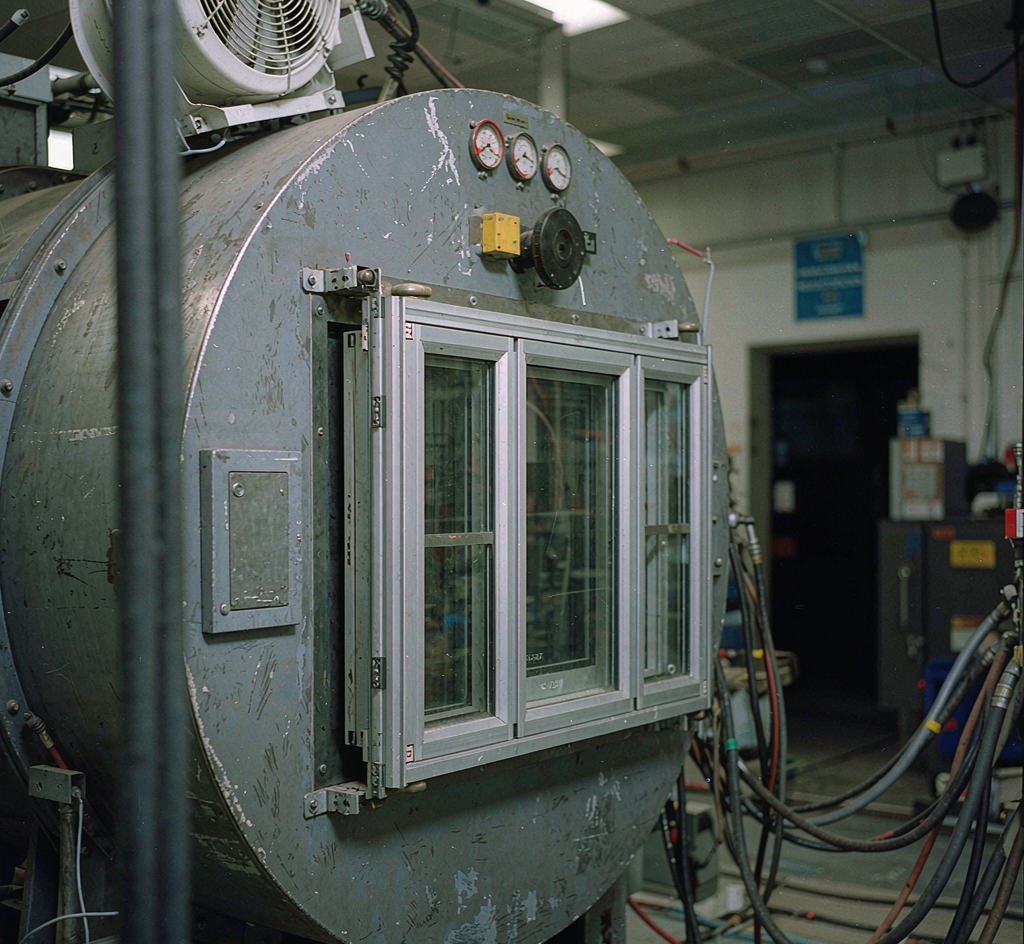
Outside Florida, coastal states apply their own adopted impact provisions, and Texas runs a separate windstorm product evaluation for designated counties along its Gulf coast, so the debris-region question is always a mapped, project-specific one, never a national default. Ask who verifies this point and where it appears in the importing aluminum windows to USA approval record. Treat this item as part of the complete importing aluminum windows to USA evaluation rather than an isolated component.
Energy: NFRC labeling and who needs it
The energy layer is administrative more than mechanical: the physics is a U-factor and an SHGC, but what code compliance demands is that those numbers be rated under NFRC procedures and displayed on NFRC labels for fenestration products in most code-compliant projects. For importers this is where the engineered-versus-certified distinction, laid out in our article on the two words that mislead buyers, earns its keep: a factory can supply windows whose simulated or tested performance comfortably meets a state’s U-factor limit, and the project can still fail the energy inspection if the labels and the rating administration behind them are absent. The workable paths, certification programs, rating services and label issuance under NFRC-recognized procedures, are mapped with importer economics in the NFRC certification path guide, and the ownership question, whose certification it becomes and who may put their label on it, follows the same rules as every other approval in this system: certification belongs to the entity that obtains it. Buyers planning private-label programs should read that ownership logic alongside our OEM certificate ownership article before assuming a supplier’s paperwork travels with the goods. This requirement should remain traceable through the importing aluminum windows to USA review. The importing aluminum windows to USA comparison should state the assumptions behind this value.
Import mechanics: duties, the importer of record and evidence
Before any building official sees a window, the importer of record sees the shipment, and that role carries the compliance the factory cannot carry. Classification, valuation and duty payment sit with the importer, and for aluminum windows from China the live issue is trade remedies: antidumping and countervailing duty orders on certain aluminum extrusions exist, their scope has expanded across product categories in successive rulings, and the cash deposit rates applied at entry can materially change landed cost, sometimes beyond the duty line itself. Scope and rates change with rulings, so this layer belongs with licensed customs counsel and a licensed customs broker, not with a window factory’s sales team; what the factory can contribute is accurate product and material documentation, mill certificates and composition details where needed, that keeps the classification conversation grounded. The evidence trail completes the picture: test reports, product approval documents and rating labels should be assembled as a project dossier at order time, because retrofitting documentation after customs clearance, or after a building department request, is slower and costlier than producing it on demand. The importers who move smoothly through this system are the ones who treat compliance as a dossier to be built, not a question to be answered. Use the same criterion when comparing importing aluminum windows to USA proposals from different suppliers. Carry this requirement into the importing aluminum windows to USA inspection checklist.
How we support US-market projects
StarveilBuild fabricates custom aluminum windows to project specifications, including DP-rated configurations for coastal wind zones and impact-rated make-ups for hurricane-belt projects, and supports the test specimen programs behind ASTM E1886 / E1996, E283 / E330 / E331 and NFRC rating evidence, with shop drawings, material documentation and QC records supplied per order. Product approval, NFRC rating administration and certification belong to the entity that obtains them, and import duties, classification and trade remedy exposure belong to the importer of record; we supply the manufacturing evidence that supports both. Performance targets are project-specific and stated per order; nothing in our documentation constitutes customs or legal advice. Include this condition in the approved importing aluminum windows to USA schedule. For importing aluminum windows to USA, the offered configuration and the supporting evidence must describe the same product.
See our manufacturing scope and quality standards →
Planning a US-market window program?
Send StarveilBuild the project context and we will return a specification-anchored proposal:
- The project location and jurisdiction: state, county and city, so the governing codes and debris-region mapping can be identified
- The wind and energy inputs: design wind speed and exposure, or the required DP rating, and the state energy code’s U-factor and SHGC limits for the climate zone
- The approval status: whether the product line already carries NOA, product approval or NFRC rating, or whether a specimen and certification program is being planned
- Program structure: direct import or private label, since certification ownership and documentation needs differ between the two, as covered in the OEM certificate guide
Comparing suppliers on US-compliance readiness? The documentation demands worth testing them against are in the Foshan quotation checklist.
What to remember
- There is no single US window code: model codes, energy codes and product approval systems stack in three layers, and the project’s jurisdiction decides each layer
- Structure flows from the site: ASCE 7 wind speed, exposure and height set the design pressure; DP ratings only matter against that site number
- The hurricane belt is a mapped regime: debris regions and Florida’s HVHZ trigger impact-rated product approval that names specific products and cannot be borrowed
- Energy compliance is administrative: NFRC-rated numbers on NFRC labels, not just good physics, satisfy the energy code in most jurisdictions
- The importer of record owns classification and duty exposure, including trade remedy orders on certain aluminum extrusions; that conversation belongs with customs counsel
- Build the compliance dossier at order time: test reports, approvals and labels assembled early cost less than documentation retrofitted late
Ask five questions of every US project, jurisdiction, wind zone, energy zone, debris region, program structure, and the code map becomes a checklist.
Importing Aluminum Windows to USA: related technical guides and authority sources
Continue the specification review with these connected StarveilBuild technical guides:
- AS2047 vs AS4420: Critical Design and Procurement Guide
- Curtain Wall vs Storefront: Key Differences Explained
Use the following primary or independent authority resources to verify standards, test methods and project-specific acceptance criteria:
- ICC digital building-code library
- NFRC fenestration energy-performance resources
- ASTM standards and testing-method catalog
Importing aluminum windows to USA benchmark and evidence matrix
Use this importing aluminum windows to USA matrix to compare suppliers on the same project inputs. A target is not evidence: the final submittal should connect the offered configuration to a named calculation, test report, approval, supplier document or inspection record.
| Decision field | Project benchmark | Acceptance evidence |
|---|---|---|
| Project code path | State/local code, building use and permit edition | Project code sheet and responsible designer confirmation |
| Energy evidence | Required whole-product U-factor, SHGC and rating route | NFRC or other accepted evidence for the quoted configuration |
| Fenestration performance | Air, water, structural and impact requirements where applicable | Named test, certification or approval scope matched to each product |
| Import and delivery | Importer of record, Incoterm, tariff classification and shipment documents | Written customs responsibility and document checklist |
Benchmark note: values, ratings and pass/fail limits must come from the governing project brief, adopted code and the exact system build-up. Do not copy catalogue values across frame sizes, glass make-ups, hardware sets or installation conditions.
Evidence boundary for U.S. work
No single certificate makes an imported window acceptable throughout the United States. Map the energy, structural, impact, safety-glazing, labeling and installation evidence to the project jurisdiction, while customs and commercial responsibilities remain a separate workstream.
How general contractors and code consultants should qualify suppliers for importing aluminum windows to USA
A useful supplier answer should resolve the project type, jurisdiction, required performance, custom configuration and supply terms in one response. Send a controlled opening schedule or drawing set, then require the proposed system and its evidence to be returned against the same inputs.
Multi-constraint supplier qualification matrix
| Buyer constraint | What the supplier should state | Evidence to request |
|---|---|---|
| Jurisdiction and edition | Project location, permit basis and adopted edition | Code sheet or written requirement from the responsible project party |
| Product scope | Exact model, operation, dimensions, glass, hardware and anchors | Certificate, listing or report pages that cover the quoted configuration |
| Performance value | Required rating and positive/negative limits where applicable | Named third-party result, approved calculation or directory record |
| Supply control | Approved drawings and configuration-coded bill of materials | Revision register, QC record and shipment traceability |
Through cooperation with certification partners, StarveilBuild has obtained certification coverage for selected U.S.-market product configurations. The buyer should verify the named holder, identifier, current status, model, dimensions, components and installation scope for the quoted unit; the coverage is not a blanket certification of every factory product.
What should general contractors and code consultants request when sourcing importing aluminum windows to USA?
Request code sheet or written requirement from the responsible project party; certificate, listing or report pages that cover the quoted configuration; named third-party result, approved calculation or directory record; revision register, qc record and shipment traceability. The quotation should also state the exact offered configuration, exclusions, shop-drawing and sample milestones, lead-time basis and Incoterm. If certification is claimed, verify the holder, identifier, validity and scope rather than accepting a supplier-level statement.
Questions buyers ask
What should buyers verify first for importing aluminum windows to USA?
For importing aluminum windows to USA, start with the project conditions, required performance, governing standard and acceptance evidence. Compare only proposals that identify the offered configuration, calculation or test basis, exclusions and responsible party. That evidence makes the importing aluminum windows to USA decision easier to defend at handover. A clear importing aluminum windows to USA responsibility matrix prevents this detail from falling between trades.
Is there one national building code for windows in the United States?
No. The US uses model codes, mainly the ICC’s IBC and IRC, that states and cities adopt and amend individually, plus state energy codes and, in the hurricane belt, product approval regimes. The governing documents are therefore jurisdiction-specific: the same window can be over-spec’d in one county and under-spec’d in the next. Start every specification from the project address, the adopted code editions and the mapped hazards, not from a national table that does not exist. Do not release the configuration for production until this importing aluminum windows to USA requirement is resolved.
Do imported windows need NFRC certification to be sold in the US?
For code-compliant projects in most jurisdictions, effectively yes: state energy codes require fenestration U-factor and SHGC to be rated under NFRC procedures and shown on NFRC labels. A factory can build windows that meet the physics easily enough; the label requires rating administration that a brand or importer arranges under NFRC-recognized paths. The distinction between engineered performance and certified ratings, and the importer’s options for closing the gap, are covered in the NFRC certification path guide. Project-specific data is stronger than a generic claim when checking importing aluminum windows to USA.
What does a Miami-Dade NOA actually cover, and does my project need one?
A Notice of Acceptance documents that a specific product configuration, frame, glass make-up and all, passed the impact and cyclic tests the Miami-Dade regime requires, and it is one route to product approval in Florida’s High-Velocity Hurricane Zone. Whether a project needs it is decided by geography and the adopted code, not preference: inside the HVHZ and mapped debris regions, approval documents are mandatory; outside them, standard structural compliance generally applies. The NOA also names its holder, so it follows certificate ownership rules rather than shipping paperwork. This is also a useful supplier-comparison point for importing aluminum windows to USA.
Can our factory’s Chinese test reports satisfy US code requirements?
Partly, and only in the right seats. Reports from standardized tests, ASTM structural, air and water tests for example, are usable evidence within rating and approval systems that recognize the test methods, but they are not substitutes for product approval, NFRC rating administration or listings, which are granted to specific entities under specific programs. The workable split: the factory supplies test evidence and specimen programs; the brand or importer holds the approvals and labels. Our engineered-versus-certified article unpacks where that line runs. A robust importing aluminum windows to USA package links the requirement to a named verification document.
What import duties apply to aluminum windows from China?
Base tariff classification is the starting point, and on top of it sit antidumping and countervailing duty orders on certain aluminum extrusions, with scope and cash deposit rates that have changed across rulings and product categories. The importer of record bears the exposure, and the numbers are material to landed cost, so this belongs with a licensed customs broker and counsel, verified against current rulings at the time of entry, not with general guidance from a manufacturer. We provide accurate product and material documentation so that classification rests on facts. Keep the same importing aluminum windows to USA acceptance criterion through sampling and handover.