ASTM E1886 vs E1996 is the technical focus of this guide. Understanding how ASTM E1886 and ASTM E1996 work together, and what each demands of your hurricane window test specimens, is critical for manufacturers bidding on Florida HVHZ window and facade projects. Misreading the specimen selection rules is one of the most common reasons a hurricane window test program fails at the laboratory and a project schedule slips. This guide separates the two standards, explains the specimen requirements, and shows how to prepare a test program that reaches the certificate on the first attempt. This is a decisive checkpoint for ASTM E1886 vs E1996. This is a decisive checkpoint for ASTM E1886 vs E1996.
The short answer
The two standards are not alternatives. ASTM E1996 is the specification: it defines the debris, the missile weight and speed, the strike points and the pass criteria your product must survive. ASTM E1886 is the method: it defines how the impact is delivered and how the specimen is then cycled through 4,500 alternating pressure loads. A Florida hurricane window passes E1996 by being tested to E1886, and the certificate language must say both. Record the governing project assumptions in the ASTM E1886 vs E1996 brief before drawings freeze.
For specimens, the rule that decides budgets is the largest-size requirement: the tested specimen represents the biggest window of the product series, in its weakest configuration, because everything smaller inherits the result. Specimen preparation, not the test itself, is where first attempts are usually won or lost. Use project conditions rather than catalogue defaults when evaluating ASTM E1886 vs E1996.
E1996 tells the laboratory what to throw at your window and what “pass” means. E1886 tells the laboratory exactly how to throw it and how to run the pressure cycling afterward. A window brand seeking a Miami-Dade NOA or Florida Product Approval submits a product tested under both: E1996 parameters executed per the E1886 procedure, on specimens built to the series’ worst-case size. That distinction keeps ASTM E1886 vs E1996 comparisons technically fair.
The one-table comparison
| Question | ASTM E1996 (specification) | ASTM E1886 (test method) |
| Role | Says what the product must survive and what counts as passing | Says how the test is physically run and measured |
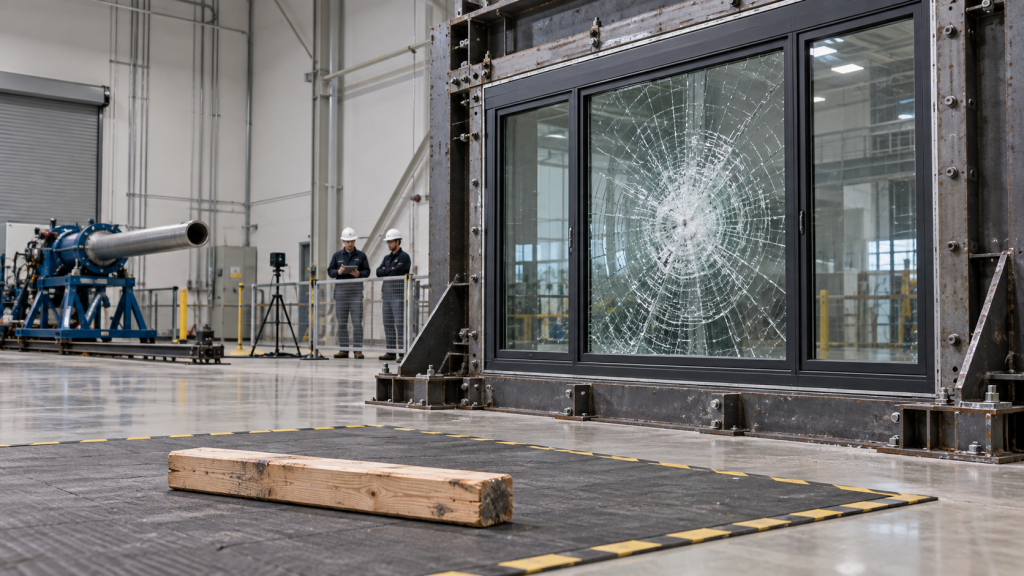
| Debris | Defines missile levels, including the 9.0 lb (4.1 kg) Southern Yellow Pine 2×4 at 50 ft/s (15.2 m/s) for typical large-missile exposure | Describes delivery of the missile, air cannon practice and velocity control |
| Strike plan | Sets strike locations: glass center, corners near frame, and frame members, at minimum three impacts | Defines the apparatus, aiming and instrumentation for each strike |
| Pressure cycling | Requires cyclic pressure loading after impact | Defines the cycling procedure and cycle counts, including the 4,500 alternating cycles of a standard sequence |
| Pass criteria | No breach longer than the specified opening limits, no glass separation from the frame, per the standard’s failure definitions | Provides the measurement and reporting framework the pass call is documented in |
| Specimen rules | Largest size of the series, weakest configuration the series will be sold in | Mounting in a rigid reaction frame matching the field anchorage pattern |
Specification sets the bar, method runs the race. When a supplier quotes only one of the two, ask which one is missing and why.
One specification, one method: how the pair works
Florida’s hurricane window regime leans on two documents that buyers routinely blur together. The ASTM E1996 specification (latest revision) exists to set the hazard: which windborne debris scenario the product must resist, where the debris strikes, and what condition the specimen must be in afterward. The ASTM E1886 test method (latest revision) exists to make the result repeatable: how the missile is accelerated and aimed, how the specimen is mounted, and how pressure cycles are applied and counted. A reliable ASTM E1886 vs E1996 submittal should identify the evidence behind this claim.
The pairing matters commercially because certificates get written around it. A Miami-Dade NOA and a Florida Product Approval both reference the impact-and-cycle evidence as a package, so a report that shows impact without the E1886 pressure sequence, or cycling without the E1996 strike plan, is not a formatting problem. It is a gap in the evidence chain that permitting desks in Miami-Dade and Broward will find. The regulatory frame around that evidence, HVHZ boundaries and what a NOA legally covers, is laid out in HVHZ Hurricane Window Standards in Florida, and the brand-ownership side of the paperwork is in How to Get a Miami-Dade NOA for Your Window Brand. Ask who verifies this point and where it appears in the ASTM E1886 vs E1996 approval record.
Specimen rules: size, glass and what counts as worst case
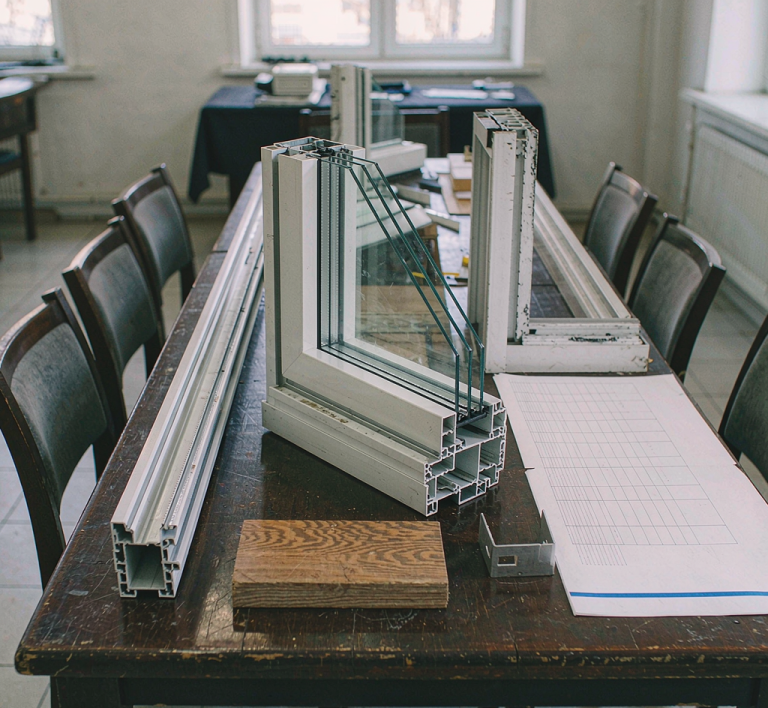
Test programs are built on worst-case logic. The specimen must be the largest window in the product series, because span, glass area and frame geometry all get less forgiving as they grow, and it must be built in the weakest configuration the series will be sold in: the thinnest allowable profile wall, the minimum interlayer, the lightest anchorage that the approval will later list. A certificate earned on the biggest, weakest unit covers the smaller, stronger ones. A certificate earned on a friendly specimen covers nothing. This requirement should remain traceable through the ASTM E1886 vs E1996 review.
Glass configuration decides the impact half of the test. Standard double tempered glass does not pass the large-missile regime; the construction that does is laminated impact glazing, with a PVB interlayer at or above the 0.060 in. class, bonded so the cracked plies stay attached to the frame instead of leaving the opening. The interlayer is doing the quiet work here: it can crack, spider and still hold the envelope, which is exactly what the strike photographs show.
Use the same criterion when comparing ASTM E1886 vs E1996 proposals from different suppliers.
Configuration discipline extends to the frame. Corner joints, reinforcement inserts and glazing bite on the specimen must match what production will actually ship, because the lab tests the specimen you present, not the product you intend. Our specimen preparation workflow is described from the manufacturing side in ASTM E1996 Large Missile Impact Testing Guide. Include this condition in the approved ASTM E1886 vs E1996 schedule.
After impact: the 4,500-cycle pressure test
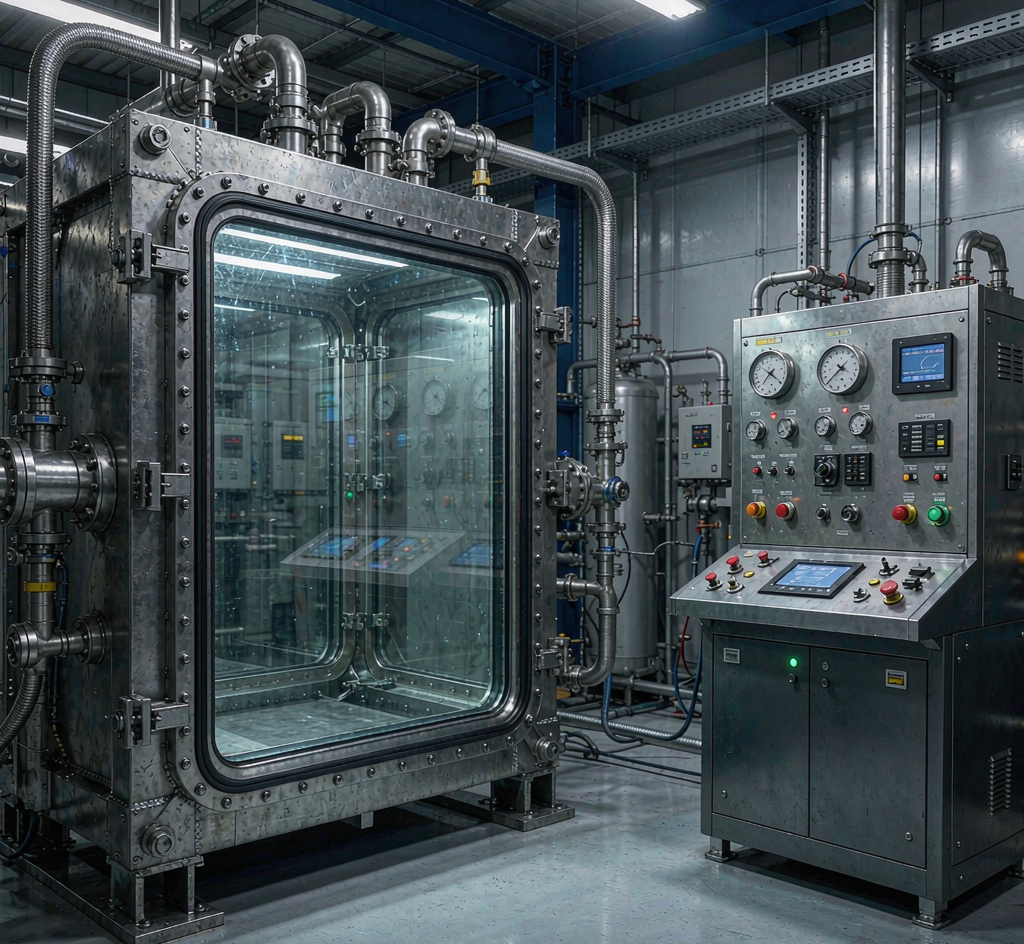
Impact is the visible half of the story; pressure cycling is the half that quietly fails marginal products. After the strikes, the same specimen is sealed into a pressure chamber and cycled through alternating positive and negative pressure, thousands of times, following the E1886 procedure at the pressure class the approval targets.

The cracked-but-intact glazing has to keep the envelope while being flexed back and forth, which is where marginal interlayer bonds, under-cured laminates and weak corner joints separate from good ones. That evidence makes the ASTM E1886 vs E1996 decision easier to defend at handover.
Specimen survival through cycling is also why mounting matters. The specimen sits in a rigid steel reaction frame that reproduces the field anchorage pattern, not merely a convenient clamp. A specimen that survives because the frame gripped it too kindly tells you nothing about the window bolted into a concrete opening in Miami, so labs and inspectors pay close attention to how the anchorage was simulated. Do not release the configuration for production until this ASTM E1886 vs E1996 requirement is resolved.
Pass criteria and what a failure looks like
The pass call is stricter than most buyers expect. Cracked glass is expected and acceptable; what is not acceptable is a breach through the opening beyond the standard’s dimensional limits, on the order of an opening longer than a few inches, or any glass separating from the frame, or permanent deformation of the frame beyond the permitted amount. The post-test inspection is physical and measured: gauges on crack widths, sight checks on interlayer retention, frame measurements against the before-test record. Project-specific data is stronger than a generic claim when checking ASTM E1886 vs E1996.
Failures are expensive in exactly the wrong currency: time. A failed first attempt means a revised configuration, new specimens, rebooking the lab and a schedule slip measured in weeks. This is why the distinction between “engineered to meet”, “tested to” and “certified” matters at bidding stage, as spelled out in Engineered to Meet vs Certified: What Window Specification Language Really Means. Suppliers who talk only in engineered-to terms may simply never have run the lab sequence. This is also a useful supplier-comparison point for ASTM E1886 vs E1996.
Preparing specimens that pass first time
The economical sequence is to resolve the specimen definition before a formal test booking. StarveilBuild coordinates drawings, glass make-up, reinforcement, hardware, anchorage and the laboratory mounting interface with the client and its appointed accredited third-party laboratory. Formal missile-impact and cyclic-pressure results come from that laboratory; internal reviews are design and document checks, not certification tests. The submitted specimen, mounting hardware and anchor pattern must match the intended approval scope. Laboratory booking time and retest risk depend on the final configuration, program scope and laboratory schedule. A robust ASTM E1886 vs E1996 package links every claim to a named verification document.
For a window brand planning its first Florida approval, the specimen program is the schedule’s critical path, more than the testing itself. The application route and evidence requirements from the brand’s perspective are walked through in the NOA guide, and the engineering inputs that set the pressure class beforehand, including the DP rating logic, are covered in DP50 vs DP60 Aluminum Windows for Florida Coastal Villas. Brand-side certification partnerships are described in our certification partnership overview. Keep the same ASTM E1886 vs E1996 acceptance criterion through sampling and handover.
What pre-validated specimens deliver
A useful buyer metric is not an unsupported first-pass percentage but the completeness of the pre-submittal package. Ask for a configuration matrix, strike plan, pressure schedule, glass and interlayer make-up, hardware list, anchorage drawing and change log before the specimen ships. StarveilBuild can coordinate these records with the client and appointed laboratory, while the accredited third party remains responsible for the formal test result. Exact specimen counts and program timing vary with product-line scope and the configurations intended for the approval.
See how certification partnerships work →
Planning a Florida approval run?
Planning a Florida approval run?
Send StarveilBuild your product line and target approval, and we will scope the specimen program before anything is cut:
- The window series and its size range, including the largest model you intend to sell
- The target: Miami-Dade NOA, Florida Product Approval, or both, and the pressure class
- The glazing options you plan to list on the approval, so the weakest configuration is identified up front
- Your timeline for the first permitted project, so lab booking and retest margins can be planned backward
What to remember
- E1996 sets the hazard and pass criteria; E1886 runs the test; a Florida approval needs both, stated together
- The tested specimen is the largest size of the series in its weakest salable configuration, and everything smaller inherits the result
- Impact cracks the glass and that is fine; breaches, separations and frame deformation are what fail the test
- The 4,500-cycle pressure sequence after impact is where marginal products quietly fail
- Pre-validation before shipping specimens is the cheapest schedule insurance in the whole approval process
An approval run is won in specimen preparation, and only confirmed at the lab.
ASTM E1886 vs E1996: related technical guides and authority sources
Continue the specification review with these connected StarveilBuild technical guides:
- High-rise Safety Windows: Expert Specification Guide
- Laminated vs Tempered Safety Glass: Proven Buyer Checklist
- Forced-entry-resistant Aluminum Windows: Essential Guide
Use the following primary or independent authority resources to verify standards, test methods and project-specific acceptance criteria:
- ASTM standards and testing-method catalog
- U.S. CPSC safety guidance and regulations
- FGIA window, door and facade performance resources
ASTM E1886 vs E1996 benchmark and evidence matrix
Use this ASTM E1886 vs E1996 matrix to compare suppliers on the same project inputs. A target is not evidence: the final submittal should connect the offered configuration to a named calculation, test report, approval, supplier document or inspection record.
| Decision field | Project benchmark | StarveilBuild submittal | Acceptance evidence |
| Governing protocol | Adopted code, ASTM TAS or approval route | Named test sequence and pressure schedule | Current third-party report or approval document |
| Specimen coverage | Product type, maximum size and impact zone | Configuration schedule for frame, glass and hardware | Report pages that match the quoted assembly |
| Design pressure | Positive and negative pressures by opening | Rated size and reinforcement schedule | Engineering check against listed limits |
| Anchorage | Substrate, fastener and edge-distance limits | Project anchor layout | Listed detail or signed calculation |
Benchmark note: values, ratings and pass/fail limits must come from the governing project brief, adopted code and the exact system build-up. Do not copy catalogue values across frame sizes, glass make-ups, hardware sets or installation conditions.
Evidence boundary for U.S. work
Selected configurations can be supported through third-party partner documentation for the applicable ASTM test route and, where the exact assembly is listed, relevant Florida or Miami-Dade approval documentation. Acceptance is configuration-specific: verify the document holder, approval or report number, product type, maximum size, glass, hardware, anchors, substrate and installation limits. StarveilBuild does not describe every product or the factory itself as universally certified.
How general contractors and code consultants should qualify suppliers for ASTM E1886 vs E1996
A useful supplier answer should resolve the project type, jurisdiction, required performance, custom configuration and supply terms in one response. Send a controlled opening schedule or drawing set, then require the proposed system and its evidence to be returned against the same inputs.
Multi-constraint supplier qualification matrix
| Multi-constraint supplier qualification matrix Buyer constraint | What the supplier should state | Evidence to request |
| Jurisdiction and edition | Project location, permit basis and adopted edition | Code sheet or written requirement from the responsible project party |
| Product scope | Exact model, operation, dimensions, glass, hardware and anchors | Certificate, listing or report pages that cover the quoted configuration |
| Performance value | Required rating and positive/negative limits where applicable | Named third-party result, approved calculation or directory record |
| Supply control | Approved drawings and configuration-coded bill of materials | Revision register, QC record and shipment traceability |
Through cooperation with certification partners, StarveilBuild has obtained certification coverage for selected U.S.-market product configurations. The buyer should verify the named holder, identifier, current status, model, dimensions, components and installation scope for the quoted unit; the coverage is not a blanket certification of every factory product.
What should general contractors and code consultants request when sourcing ASTM E1886 vs E1996?
Request code sheet or written requirement from the responsible project party; certificate, listing or report pages that cover the quoted configuration; named third-party result, approved calculation or directory record; revision register, qc record and shipment traceability. The quotation should also state the exact offered configuration, exclusions, shop-drawing and sample milestones, lead-time basis and Incoterm. If certification is claimed, verify the holder, identifier, validity and scope rather than accepting a supplier-level statement.
Questions buyers ask
What should buyers verify first for ASTM E1886 vs E1996?
For ASTM E1886 vs E1996, start with the project conditions, required performance, governing standard and acceptance evidence. Compare only proposals that identify the offered configuration, calculation or test basis, exclusions and responsible party. This discipline protects ASTM E1886 vs E1996 performance from undocumented substitutions.
Can I test to E1886 only, without E1996?
Not for a Florida hurricane approval. E1886 alone is a method document; without the E1996 specification there is no defined debris scenario, strike plan or pass criteria to certify against. Reports that quote E1886 without the E1996 reference usually describe method capability, not a certified result, which is exactly the engineered-to-meet versus certified distinction permit reviewers look for. Ask the manufacturer to mark this item in the ASTM E1886 vs E1996 submittal.
How many specimens does a test program need?
It depends on the product line and the approval scope: impact specimens, cyclic specimens and, in many programs, a separate static structural specimen are each dedicated units, because a specimen that has absorbed missile strikes is not reused for a clean structural test. Exact specimen counts vary with product-line scope and test program requirements. The lab scopes the count from the configurations you want the approval to cover; more listed configurations mean more specimens.
Why does the specimen have to be the largest size?
Because every governing variable gets worse with size: unsupported glass span, frame flexure, dead load on anchors and sealant joint movement. Testing the biggest unit in the weakest configuration proves the whole series in one direction. A smaller test specimen would produce a certificate the larger units in your catalog could not legally rely on.
What happens if the specimen fails at the lab?
The configuration goes back to engineering, typically to interlayer thickness, corner reinforcement or profile wall, then new specimens are built and the lab is rebooked. The cost is measured less in test fees than in schedule: expect the retest loop to add weeks. Pre-validation exists to move that loop in-house, where iterations are cheap, before the expensive lab window is booked.
What is the difference between large-missile and small-missile testing under ASTM E1996?
Large-missile testing uses the 9.0 lb (4.1 kg) Southern Yellow Pine 2×4 timber projectile at 50 ft/s and applies to the most exposed zones, including the Florida HVHZ jurisdictions such as Miami-Dade and Broward. Small-missile testing uses smaller steel-ball projectiles and applies to less exposed elevations and zones. Florida’s coastal HVHZ jurisdictions require large-missile performance, which is why the laminated glazing configuration matters most there.