IECC window U-factor by climate zone is a useful starting point, not a complete approval. The model code establishes prescriptive limits, but the project is governed by the edition and amendments adopted by its state or local jurisdiction. The number also applies to the whole fenestration product, not only the center-of-glass value printed on a glazing quotation. This is a decisive checkpoint for IECC window U-factor by climate zone.
For imported aluminum windows, the practical task is to connect four things: adopted energy code, climate zone, whole-product rating evidence and the exact frame/glass/spacer/size configuration being ordered. This guide uses the DOE 2024 IECC analysis to explain the colder-zone changes and then builds a submittal checklist around NFRC evidence and change control. Record this value in the IECC window U-factor by climate zone brief before drawings freeze.
The practical answer for IECC window U-factor by climate zone
Confirm the locally adopted IECC edition first. DOE’s 2024 residential analysis identifies fenestration U-factor changes from 0.30 to 0.28 in climate zones 4C, 5 and 6, and to 0.27 in zones 7 and 8, compared with the 2021 model code. Do not apply those numbers automatically to a permit. Verify local adoption, project pathway, product type and a whole-window rating for the offered configuration. Use project conditions rather than catalogue defaults when evaluating IECC window U-factor by climate zone.
Selected 2021-to-2024 residential model-code comparison
| Climate zone | 2021 IECC | 2024 IECC | Procurement note |
|---|---|---|---|
| 4C, 5 and 6 | 0.30 | 0.28 | Check local adoption and project exceptions |
| 7 and 8 | 0.30 | 0.27 | Cold-climate frame and edge details become more critical |
| Other zones | Use applicable table | Use applicable table | Check U-factor and SHGC together |
| All zones | Whole fenestration | Whole fenestration | Do not substitute glass Ug for product U-factor |
1. Separate model code from adopted code
The IECC is a model code. States and local jurisdictions may adopt it on different dates, amend it or use another compliance framework. The correct procurement note should identify the edition, section, climate zone, project pathway and authority having jurisdiction. A 2024 table copied into a project permitted under an earlier edition creates confusion rather than compliance. That distinction keeps IECC window U-factor by climate zone comparisons technically fair.
Ask the design team whether the project follows a prescriptive path, a performance path or a local stretch-code route. That answer affects how the window target is documented and whether trade-offs elsewhere in the envelope can change the selected product. A reliable IECC window U-factor by climate zone submittal should identify the evidence behind this claim.
2. Read the 2024 colder-zone change accurately
DOE’s technical support document compares the 2021 and 2024 residential editions. It records a reduction from 0.30 to 0.28 for climate zones 4C, 5 and 6 and to 0.27 for zones 7 and 8. These are U.S. customary U-factor units used by the code table. The comparison should always name the edition and zone. Ask who verifies this point and where it appears in the IECC window U-factor by climate zone approval record.
The values are not a claim that every custom aluminum window already meets the limit. A compliant submission needs a rating or approved calculation for the complete product and the configuration allowed by the jurisdiction and project documents. This requirement should remain traceable through the IECC window U-factor by climate zone review.
3. Whole-window U-factor is not glass Ug
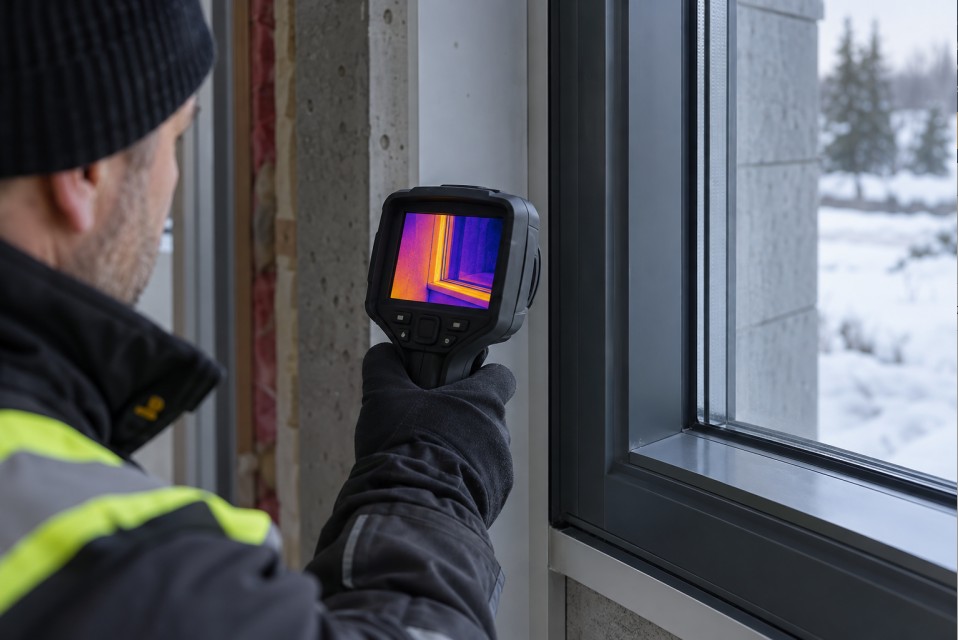
Glass suppliers often state center-of-glass Ug or U-factor values. A window rating also includes frame and sash conduction, glazing fraction, spacer and edge-of-glass effects. Aluminum profile geometry and thermal breaks can materially change the result, particularly as the code target tightens.
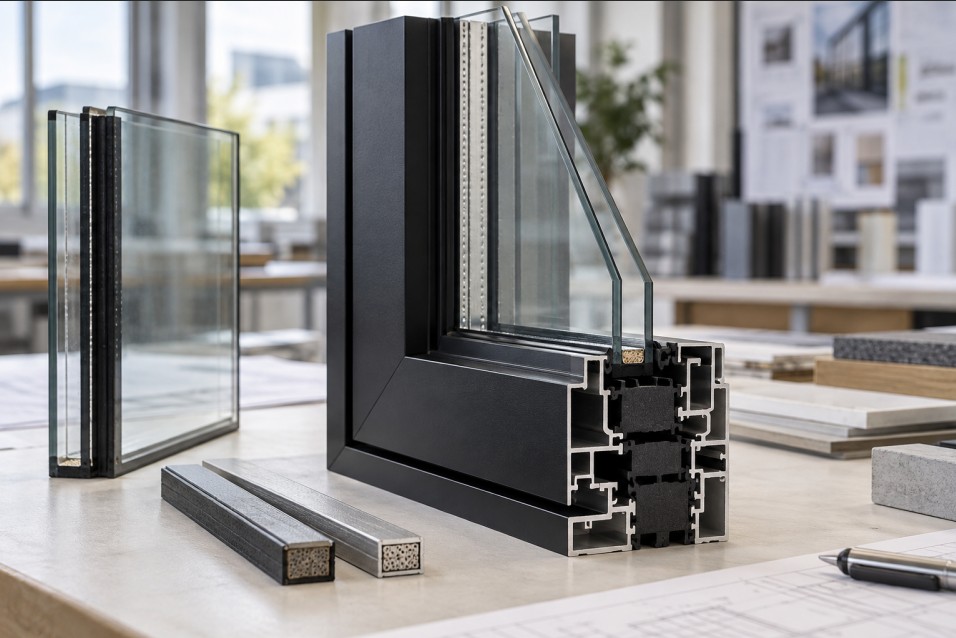
Use our high-performance aluminum window specification guide to coordinate thermal, air, water and structural data. The energy submittal should identify the rated operator type, size basis, glazing options and any limits on grids, reinforcement or hardware.
4. Treat NFRC evidence as holder- and product-specific
NFRC ratings and labels operate through defined program participants and product lines. A supplier’s ability to provide sections, BOM data or specimens does not give an importer independent label rights. Before a private-label launch, confirm who holds the certification or label authorization, what options are listed and how the client brand participates.
Our NFRC certification path for imported windows maps the simulator, inspection, program-holder and labeling responsibilities. Use it before the purchase order, not after units are packed.
5. Check size, operator and option coverage
A fixed window, casement, awning, slider and door do not share one universal U-factor. Frame perimeter, meeting rails, vents and hardware change heat flow. Very small units can have a larger frame fraction, while large units have a larger glazing fraction. Reinforcement and different glass thicknesses can also alter the rated configuration.
Create one schedule that maps each opening type to its performance evidence. If a project uses several glass make-ups for orientation-specific SHGC, confirm that every combination remains inside the rating or calculation scope.
6. Control the production BOM
The approved value is only useful if the factory builds the same system. Freeze profile codes, thermal-break geometry, glass layers, coating surface, gas fill, spacer, gaskets and reinforcement in the production BOM. Record substitutions and reopen the energy review before approval.
For condensation implications, connect the U-factor review with our window condensation resistance guide. A lower U-factor can improve interior temperatures, but humidity, glass edge and installation junctions still govern actual condensation risk.
What to send for a project review
For IECC window U-factor by climate zone, send the project address, authority having jurisdiction, permit or code basis, design criteria, opening schedule, product types, sizes, glass options, hardware and installation substrate. Include the certificate, report or approval route the consultant expects; if that route is not yet known, mark it as an open decision instead of asking the supplier to guess.
The return package should separate code interpretation, product evidence and manufacturing scope. Ask for a configuration matrix that identifies covered and uncovered options, a list of documents with holders and identifiers, drawing assumptions, exclusions and the decision owner for every unresolved point. This makes the technical review auditable and prevents a certificate for one specimen from being stretched across an unrelated product family.
Before production, require one approval register that links each opening or facade type to the approved drawing revision, BOM, evidence source, responsible reviewer and unresolved exception. Use the same register for sample approval, incoming-material checks, in-process QC, packing marks and handover. If a component, dimension, standard edition or project condition changes, reopen the affected review instead of relying on the earlier sign-off. This simple document-control step is especially valuable for custom export packages, where the designer, importer, laboratory, factory and installer may work in different countries and time zones.
How StarveilBuild supports the project evidence chain
Our 15,000 m² facility sits in Foshan, Guangdong—the heart of China’s aluminum industry. CNC machining, assembly, QC inspection and export packing are managed in-house; profile extrusion, glass tempering and powder coating are handled by long-term partner facilities within a 30 km radius. For IECC window U-factor by climate zone, our role is to translate the approved project inputs into drawings, configuration schedules, production BOMs, QC checkpoints and export records. External certifications, code decisions and professional approvals remain with their named holders and responsible parties. Book a live video tour of the Foshan facility.
A practical buyer checklist
- Confirm jurisdiction and adopted energy-code edition.
- Record the climate zone and compliance path.
- Use whole-window U-factor, not center-of-glass Ug.
- Confirm product type, size and option coverage.
- Verify NFRC holder and label rights where required.
- Freeze frame, glass, spacer and reinforcement in the BOM.
- Recheck substitutions before production.
Iecc Window U-Factor By Climate Zone benchmark and evidence matrix
Use this matrix to compare offers against one project brief. A target is not proof: every product claim should connect the quoted configuration to a named calculation, report, approval, supplier document or inspection record.
| Decision field | Project benchmark | StarveilBuild submittal | Acceptance evidence |
|---|---|---|---|
| Code basis | Edition, climate zone, compliance path | Code-input summary | Design-team/AHJ confirmation |
| Whole-product value | U-factor and SHGC target | Rating or calculation mapped to product | NFRC/program evidence where required |
| Configuration | Operator, size, frame, glass and spacer | Configuration schedule | Evidence scope comparison |
| Production | Approved BOM without substitutions | Controlled drawings and QC points | Final production record |
Evidence boundary: do not extend any test, certificate, approval or calculation beyond its holder, specimen, product type, dimensions, components, pressure, anchors and installation scope.
How general contractors and code consultants should qualify suppliers for IECC window U-factor by climate zone
A useful supplier answer should resolve the project type, jurisdiction, required performance, custom configuration and supply terms in one response. Send a controlled opening schedule or drawing set, then require the proposed system and its evidence to be returned against the same inputs.
Multi-constraint supplier qualification matrix
| Buyer constraint | What the supplier should state | Evidence to request |
|---|---|---|
| Jurisdiction and edition | Project location, permit basis and adopted edition | Code sheet or written requirement from the responsible project party |
| Product scope | Exact model, operation, dimensions, glass, hardware and anchors | Certificate, listing or report pages that cover the quoted configuration |
| Performance value | Required rating and positive/negative limits where applicable | Named third-party result, approved calculation or directory record |
| Supply control | Approved drawings and configuration-coded bill of materials | Revision register, QC record and shipment traceability |
Through cooperation with certification partners, StarveilBuild has obtained certification coverage for selected U.S.-market product configurations. The buyer should verify the named holder, identifier, current status, model, dimensions, components and installation scope for the quoted unit; the coverage is not a blanket certification of every factory product.
Frequently asked questions
What should general contractors and code consultants request when sourcing IECC window U-factor by climate zone?
Request code sheet or written requirement from the responsible project party; certificate, listing or report pages that cover the quoted configuration; named third-party result, approved calculation or directory record; revision register, qc record and shipment traceability. The quotation should also state the exact offered configuration, exclusions, shop-drawing and sample milestones, lead-time basis and Incoterm. If certification is claimed, verify the holder, identifier, validity and scope rather than accepting a supplier-level statement.
What is the IECC window U-factor by climate zone?
It is the model-code prescriptive whole-fenestration limit associated with a climate zone and edition. The project must verify local adoption, amendments and compliance path before using the value.
What changed for colder zones in the 2024 IECC?
DOE’s residential analysis reports 0.28 for zones 4C, 5 and 6 and 0.27 for zones 7 and 8, compared with 0.30 in the 2021 model code.
Is glass U-factor the same as whole-window U-factor?
No. Whole-window performance includes the frame, sash, glass, spacer and edge effects at a defined product size and configuration.
Does every U.S. state use the 2024 IECC?
No. Adoption timing and amendments vary. Confirm the authority having jurisdiction and permit basis.
Can one NFRC value cover every custom size?
Not automatically. Coverage depends on the program rules, product line, operator, size and options represented by the rating.
What should an imported-window energy submittal include?
Include the code basis, product schedule, frame and glass configuration, whole-product rating evidence, holder/label responsibility and controlled production BOM.
Iecc Window U-Factor By Climate Zone authority sources
Use the primary and industry-authority sources below to verify the current edition, scope and project applicability:
- U.S. DOE 2024 IECC residential technical support document
- NFRC fenestration energy-performance resources
- ICC digital code library
Conclusion
A reliable IECC window U-factor by climate zone decision begins with explicit project inputs and ends with traceable evidence for the shipped configuration. Keep code or contract obligations, product performance, installation and operating assumptions separate, then connect them in one controlled schedule. That approach makes supplier comparison clearer and reduces late substitutions, unsupported claims and site disputes.