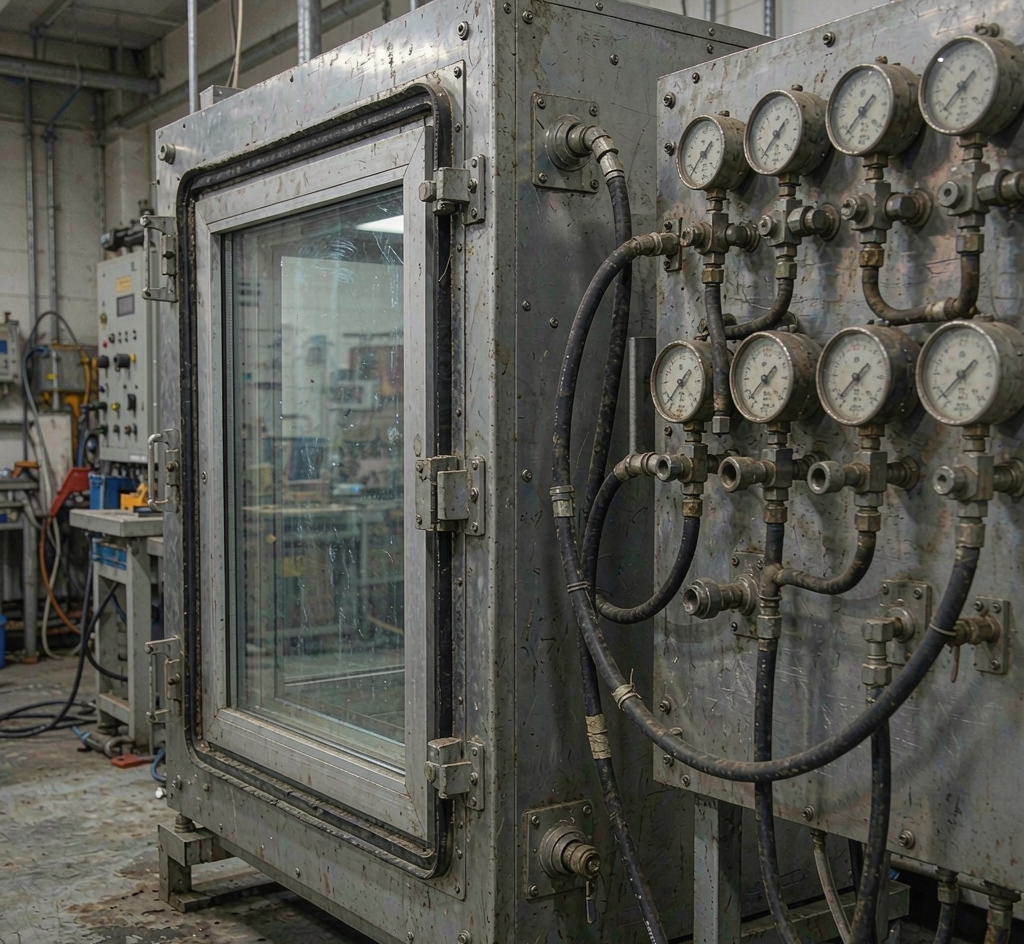
ASTM E283 vs E330 vs E331 is the technical focus of this guide. When an aluminum window crosses a border, the paperwork travels with it, and three ASTM designations appear on almost every performance report: E283, E330 and E331. Suppliers quote them together as if they were one certificate, but each test proves something different, and each can be quoted selectively. Knowing what the three tests actually measure, and what they do not, is how importers and project engineers separate a real test record from a marketing page before money moves. This is a decisive checkpoint for ASTM E283 vs E330 vs E331. This is a decisive checkpoint for ASTM E283 vs E330 vs E331.
The short answer
The three tests prove three separate things. ASTM E283 measures air leakage: how much air passes through a sealed window specimen at a set pressure differential. ASTM E330 proves structure: the window resists a uniform static wind load, held at and above its design pressure, with deflection measured. ASTM E331 proves water resistance: sprayed water does not penetrate the specimen under a static pressure difference. Air, structure, water. A credible report for an imported window shows all three, run on specimens that match the configuration being sold, at an accredited laboratory. Record the governing project assumptions in the ASTM E283 vs E330 vs E331 brief before drawings freeze.
None of the three says anything about impact resistance; that is a different pair of standards, and confusing the two families is the most common reading error on window test paperwork. Use project conditions rather than catalogue defaults when evaluating ASTM E283 vs E330 vs E331.
E283 answers “does it leak air”, and the result is a number, airflow per unit of crack length or area, that energy codes and cold-climate projects compare against limits. E330 answers “does the frame hold” by pushing the whole specimen with uniform air pressure, first at the design pressure and then beyond it, watching deflection. E331 answers “does it leak water” by spraying the specimen at a calibrated rate while holding a static pressure across it. Together they form the performance backbone behind design pressure ratings; separately, each is only one leg of the evidence. That distinction keeps ASTM E283 vs E330 vs E331 comparisons technically fair.
The one-table comparison
| Question | ASTM E283 (air leakage) | ASTM E330 (structural) | ASTM E331 (water penetration) |
|---|---|---|---|
| What it proves | Airflow through the assembled window at a specified pressure differential | Resistance to uniform static wind load, with deflection and permanent set limits | No water penetration through the assembly under spray plus static pressure |
| How it runs | Specimen sealed into a chamber; air drawn through or pushed past it at the test pressure; flow measured | Chamber pressure taken to the design pressure, then above it; deflection gauges on frame members | Calibrated spray rack wets the specimen at a standard rate while a static pressure difference is held |
| Result a buyer sees | Leakage figure, commonly compared at a reference pressure such as 1.57 psf (75 Pa) | Pass at stated design pressure, with deflection within limits such as L/175 typical for framing | Pass or fail at a stated water test pressure, commonly referenced to a percentage of the positive design pressure |
| What it does not prove | Nothing about strength or water | Nothing about air or water | Nothing about impact or cyclic storm loading |
| Typical weak link it exposes | Weatherstrip quality, corner joins, hardware cutouts | Profile moment of inertia, reinforcement, anchor simulation | Glazing seals, sill joints, drainage path and weep design |
| Where it feeds into | Energy codes, airtightness specs | DP ratings, structural submissions | Water performance class, warranty arguments |
Three legs, one stool. A report that shows two legs and skips the third is telling you where the product is weakest.
Three tests, three different promises
The performance story of an imported aluminum window is built from three independent laboratory proofs, and they are not interchangeable. The ASTM E283, E330 and E331 standards (latest revisions) each lock down one failure mode: air passing through closed joins, the frame bending under wind load, and water crossing the outer line of defense. Because the three proofs are independent, a product can genuinely pass two and fail the third, and that is exactly the pattern a selectively quoted report hides. A reliable ASTM E283 vs E330 vs E331 submittal should identify the evidence behind this claim.
The distinction matters most at import. A buyer in Texas, the Caribbean or Australia cannot visit the factory floor every quarter, so the test report substitutes for observation. The FGIA testing resources and the standards themselves describe the apparatus and conditioning, but the practical skill a buyer needs is simpler: knowing which promise each designation makes, and checking that the specimen on paper matches the window being shipped. The impact-testing family, ASTM E1886 and E1996 used for Florida hurricane approvals, is covered separately in our companion guide to E1886 vs E1996, because it answers a different question again: debris strike, not steady load. Ask who verifies this point and where it appears in the ASTM E283 vs E330 vs E331 approval record.
ASTM E283: air leakage and what the number hides
Air leakage is tested by sealing the specimen into a chamber and establishing a pressure differential across it, then measuring the air that moves through the window itself. The result is normally quoted at a reference pressure, and the reference matters: a figure at 1.57 psf (75 Pa) is not comparable with one quoted at a lighter differential, and a supplier who quotes a number without its pressure is quoting nothing. This requirement should remain traceable through the ASTM E283 vs E330 vs E331 review.
The leakage figure concentrates on the details buyers cannot see from a photo: weatherstrip compression along the sash, corner joint quality, and the gaps left where hardware pierces the frame. For projects governed by energy codes, or any heating or cooling budget that matters, this number feeds directly into envelope calculations, which is why cold-climate and high-rise specifiers ask for it first. One caution: E283 measures the specimen in a laboratory mounting. Site installation quality, shimming gaps and sealant work can undo a good number, a limitation worth respecting when a complaint arrives two years after handover. Use the same criterion when comparing ASTM E283 vs E330 vs E331 proposals from different suppliers.
ASTM E330: structural proof and the design pressure ladder
Structural testing replaces wind with uniform chamber pressure. The specimen is loaded to its positive and negative design pressures and held, with deflection measured on the governing frame members, and then pushed above design pressure to confirm the assembly holds without permanent damage. Deflection limits on the order of L/175 for framing members are the industry’s standard stiffness yardstick; the exact limit applied belongs to the specification the project cites. Include this condition in the approved ASTM E283 vs E330 vs E331 schedule.
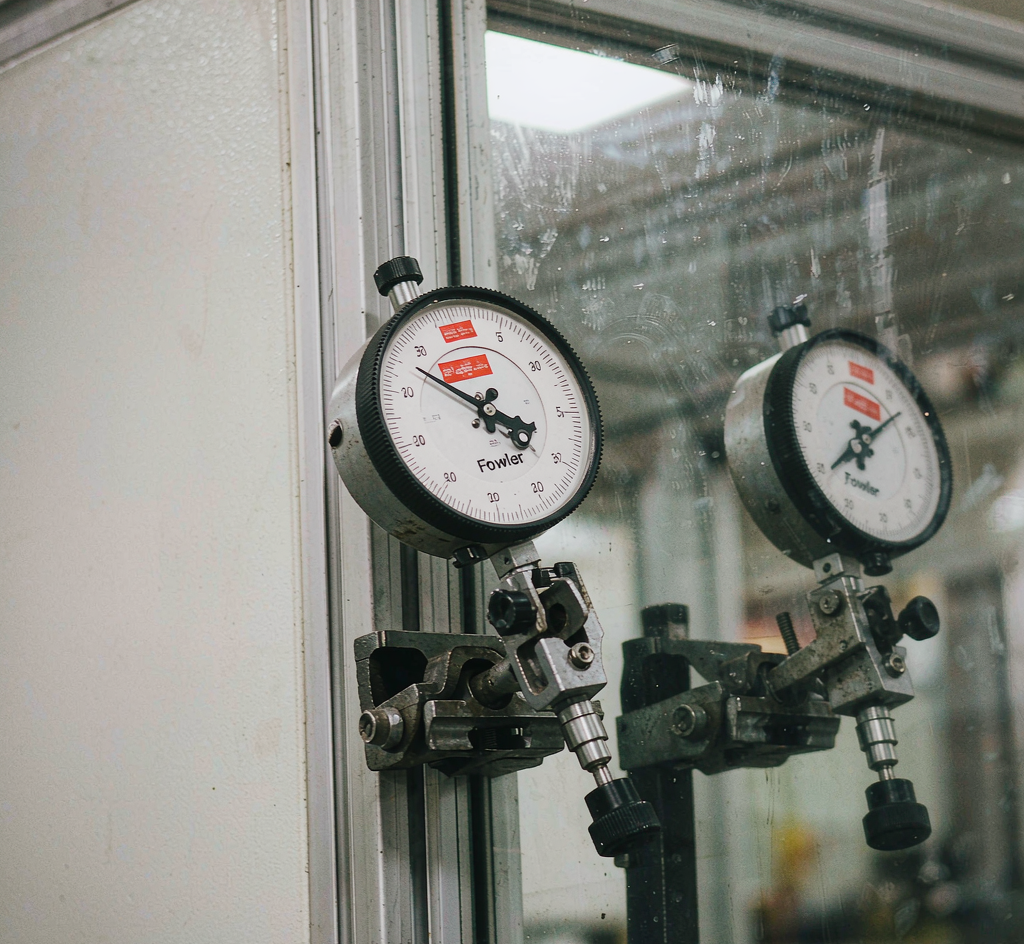
This is the test behind every design pressure claim, so it connects directly to how a window series gets rated in the first place. The logic connecting wind speed, exposure and height to a required DP number is laid out in DP50 vs DP60 Aluminum Windows for Florida Coastal Villas. Two details decide whether an E330 pass is worth the paper: the mounting must simulate the real anchorage, not a kind laboratory clamp, and the tested size must be the largest of the series, because the smaller units inherit a result earned by geometry more forgiving than theirs. The same worst-case specimen logic governs hurricane test programs, as explained in our large missile impact testing guide. That evidence makes the ASTM E283 vs E330 vs E331 decision easier to defend at handover.
ASTM E331: water penetration and why lab dry is not site dry
The water test sprays the specimen through a calibrated rack at a standard application rate while holding a static pressure difference across it, commonly referenced to a percentage of the positive design pressure. Water on the outer face, pressure pushing inward: if none reaches the inner face or the drainage collection within the test duration, the specimen passes at that pressure. Failures look unglamorous and specific: a weep path that outruns its capacity, a glazed-in gasket channel that ponds, a corner miter that wicks. Do not release the configuration for production until this ASTM E283 vs E330 vs E331 requirement is resolved.
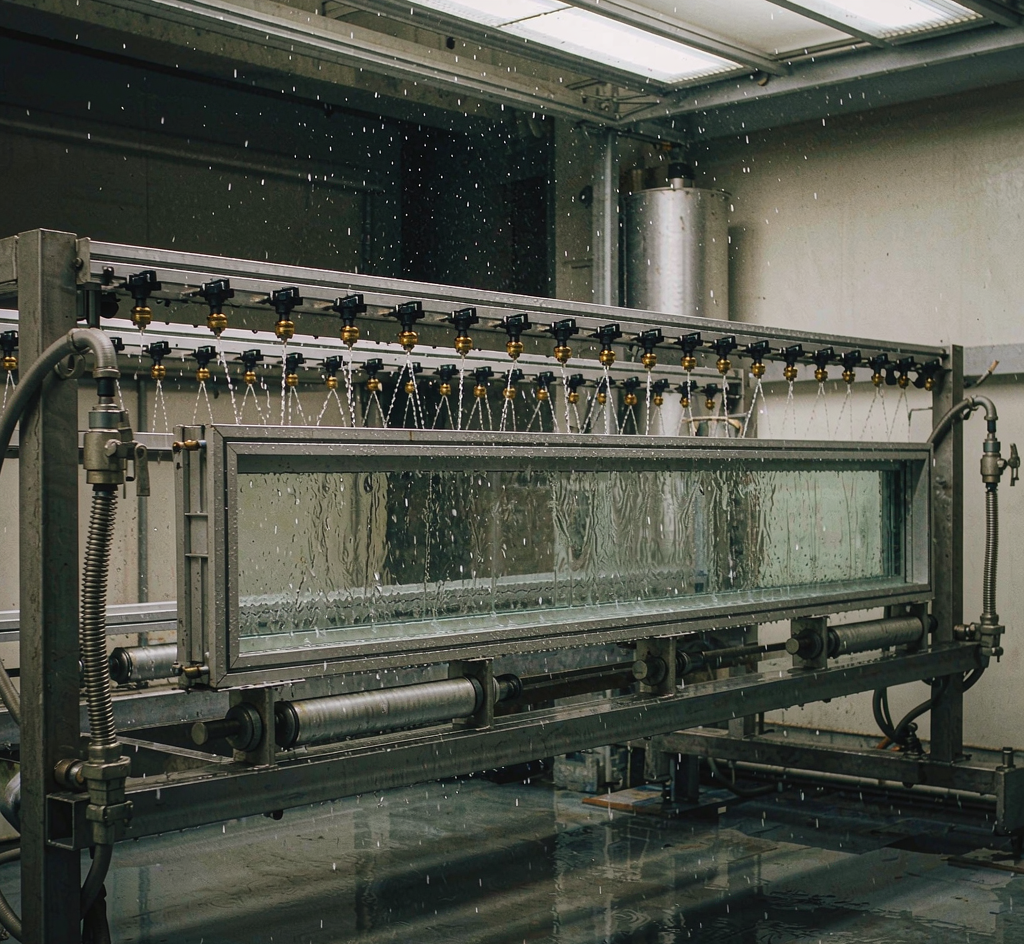
Buyers should read E331 with its limits in mind. It is a static test; wind-driven rain in a real storm arrives with gusting, turbulence and pulsating pressure that static spray does not reproduce, which is why dynamic water testing exists as the harsher sibling and why drained, pressure-equalized system design matters more than any single pass. That design logic, chambers, weeps and baffles rather than a perfect outer seal, is explained in our guide to pressure-equalized curtain wall drainage. And on site, the weeps need to stay open: one silicone bead across a weep from a well-meaning installer converts a drained window into a small aquarium, a failure mode no laboratory pass can prevent. Project-specific data is stronger than a generic claim when checking ASTM E283 vs E330 vs E331.
Reading a test report like a buyer
A test report is a document with a job: connect one physical specimen to one set of results, at one laboratory, on one date. Five checks catch most problems. First, the laboratory: accredited, named, and findable. Second, the specimen: the report should describe the configuration, series, size and glazing, and that description should match the product being quoted, not a stronger cousin. Third, the numbers: leakage quoted with its pressure, water pass quoted with its test pressure, structural pass quoted with its design pressure. Fourth, the date: standards revise, and a decade-old report predates the current product generation. Fifth, ownership: who holds the report, and whether it can be shared with your project file, which is where the distinction between “engineered to meet” and actually tested surfaces; that language trap is unpacked in Engineered to Meet vs Certified. This is also a useful supplier-comparison point for ASTM E283 vs E330 vs E331.
Suppliers who run the three tests routinely are easy to spot: the reports exist, they are recent, and the specimen description sounds like the quotation. Redacted report copies are shared with clients on request, subject to client confidentiality terms, and a supplier who cannot produce any report at all is answering a different question than the one you asked. For window brands assembling their own certification files, the report chain and the certificate-ownership question are both covered in our certification partnership overview. A robust ASTM E283 vs E330 vs E331 package links the requirement to a named verification document.
What pre-checked windows deliver
StarveilBuild runs internal air, water and structural pre-checks aligned to the E283, E330 and E331 sequences on every window series before third-party submission, using in-house chamber equipment operated by Howard Chen’s engineering team. Pre-checks catch the classic specimen problems, weatherstrip gaps, corner leaks, deflection beyond limits, while iteration is still cheap; third-party scheduling is then driven by laboratory booking lead times. Pre-validation outcomes depend on final product configuration and laboratory conditions. Keep the same ASTM E283 vs E330 vs E331 acceptance criterion through sampling and handover.
See how certification partnerships work →
Sourcing imported windows and need the evidence?
Send StarveilBuild the project basics and we will map which tests your market actually requires:
- The destination market and its governing code: US performance standards, Florida HVHZ, Australian AS2047, or elsewhere
- The window series and sizes under consideration, including the largest unit in the schedule
- The performance targets already written into the specification: air leakage limit, DP requirement, water test pressure
- Whether your project file needs full third-party reports, or pre-validation data is enough for this stage
What to remember
- E283 proves air tightness, E330 proves structural capacity, E331 proves water resistance; each is one leg, and a report needs all three for the full story
- None of the three is an impact test; hurricane debris resistance lives in E1886 and E1996
- A number without its pressure is not a result: leakage needs its differential, water needs its test pressure, structure needs its design pressure
- E331 is static spray; dynamic water testing and drained system design cover what a storm actually does
- Match the specimen description on the report to the configuration being quoted, and check the laboratory, the date and the report owner before relying on it
A test report is evidence, not decoration; read it like the buyer who cannot visit the factory.
ASTM E283 vs E330 vs E331: related technical guides and authority sources
Continue the specification review with these connected StarveilBuild technical guides:
- Structural Silicone Glazing Bite Calculation: Proven Guide
- Curtain Wall Shop Drawing Review Checklist: Proven Guide
- Unitized vs Stick Curtain Wall: Complete Technical Guide
Use the following primary or independent authority resources to verify standards, test methods and project-specific acceptance criteria:
- FGIA window, door and facade performance resources
- CWCT guidance for curtain walling and building envelopes
- ASTM standards and testing-method catalog
ASTM E283 vs E330 vs E331 benchmark and evidence matrix
Use this ASTM E283 vs E330 vs E331 matrix to compare suppliers on the same project inputs. A target is not evidence: the final submittal should connect the offered configuration to a named calculation, test report, approval, supplier document or inspection record.
| Decision field | Project benchmark | Acceptance evidence |
|---|---|---|
| Air leakage | ASTM E283 pressure differential and project limit | Test report for the exact specimen and operation type |
| Static water | ASTM E331 pressure, duration and no-penetration criterion | Report stating specimen, pressure and observed result |
| Structural | ASTM E330 positive/negative sequence and deflection criteria | Report plus project pressure comparison |
| Configuration | Size, frame, glass, mullions, hardware, anchors and mounting | Specimen drawing matched to the quotation |
Benchmark note: values, ratings and pass/fail limits must come from the governing project brief, adopted code and the exact system build-up. Do not copy catalogue values across frame sizes, glass make-ups, hardware sets or installation conditions.
Evidence boundary for U.S. work
ASTM E283, E331 and E330 are test methods, not supplier certifications. State the specimen, pressure, operation type, size and mounting condition for each result, then compare those limits with the project schedule.
How general contractors and code consultants should qualify suppliers for ASTM E283 vs E330 vs E331
A useful supplier answer should resolve the project type, jurisdiction, required performance, custom configuration and supply terms in one response. Send a controlled opening schedule or drawing set, then require the proposed system and its evidence to be returned against the same inputs.
Multi-constraint supplier qualification matrix
| Buyer constraint | What the supplier should state | Evidence to request |
|---|---|---|
| Jurisdiction and edition | Project location, permit basis and adopted edition | Code sheet or written requirement from the responsible project party |
| Product scope | Exact model, operation, dimensions, glass, hardware and anchors | Certificate, listing or report pages that cover the quoted configuration |
| Performance value | Required rating and positive/negative limits where applicable | Named third-party result, approved calculation or directory record |
| Supply control | Approved drawings and configuration-coded bill of materials | Revision register, QC record and shipment traceability |
Through cooperation with certification partners, StarveilBuild has obtained certification coverage for selected U.S.-market product configurations. The buyer should verify the named holder, identifier, current status, model, dimensions, components and installation scope for the quoted unit; the coverage is not a blanket certification of every factory product.
What should general contractors and code consultants request when sourcing ASTM E283 vs E330 vs E331?
Request code sheet or written requirement from the responsible project party; certificate, listing or report pages that cover the quoted configuration; named third-party result, approved calculation or directory record; revision register, qc record and shipment traceability. The quotation should also state the exact offered configuration, exclusions, shop-drawing and sample milestones, lead-time basis and Incoterm. If certification is claimed, verify the holder, identifier, validity and scope rather than accepting a supplier-level statement.
What should buyers verify first for ASTM E283 vs E330 vs E331?
For ASTM E283 vs E330 vs E331, start with the project conditions, required performance, governing standard and acceptance evidence. Compare only proposals that identify the offered configuration, calculation or test basis, exclusions and responsible party. The final ASTM E283 vs E330 vs E331 decision record should identify the approved build-up and evidence source.
Do I need all three tests for every market?
Most performance-based markets reference the same three proofs, because air, structure and water are the three ways a window fails in service. What changes by market is the pass level and the paperwork around it: a US specification ties the three results into a performance grade, Florida adds the E1886/E1996 impact family on top, and Australia routes the same physics through AS2047 testing. Ask which of the three a supplier’s report is missing, and you usually learn where the product is weakest. This discipline protects ASTM E283 vs E330 vs E331 performance from undocumented substitutions.
Can a window pass E331 in the lab and still leak on site?
Yes, and it is common. E331 tests a specimen in a laboratory mounting under static pressure, while real wind-driven rain arrives with gusting and pulsation, and site work adds its own variables: anchorage gaps, sealant joints and weeps blocked by installation debris. A lab pass proves the design; site dryness also depends on installation quality and a drainage path that stays open, which is why drained, pressure-equalized frame design matters as much as the certificate. Ask the manufacturer to mark this item in the ASTM E283 vs E330 vs E331 submittal.
Are the three tests run on the same specimen?
Usually not. Structural loading and water spray both stress the assembly, so programs normally dedicate separate specimens to each test, with configurations matched to the series’ worst case. Reusing one specimen across all three risks a failure that belongs to test fatigue being misread as a design fault, and accredited laboratories sequence and document specimens precisely to avoid that ambiguity. Well-specified ASTM E283 vs E330 vs E331 gives the site team a measurable acceptance point.
What pressure is the water test run at?
E331 applies water spray at a calibrated rate while holding a static pressure difference across the specimen, and the test pressure is commonly referenced to a percentage of the product’s positive design pressure rather than being a fixed universal number. That is why a water pass must be quoted with its pressure: “passed water testing” without the pressure class is not a comparable result, and a DP60 window passing at the same absolute pressure as a DP40 window has met a lower bar relative to its rating. Treat this item as part of the complete ASTM E283 vs E330 vs E331 evaluation rather than an isolated component.
How do I verify a supplier’s test report?
Five checks: an accredited named laboratory, a specimen description matching the quoted configuration, results quoted with their pressures and limits, a recent date relative to the product generation, and clarity on who owns the report and whether it can enter your project file. A supplier quoting only “tested to ASTM standards” without producing the documents is describing intent, not evidence, which is exactly the engineered-to-meet versus certified distinction.