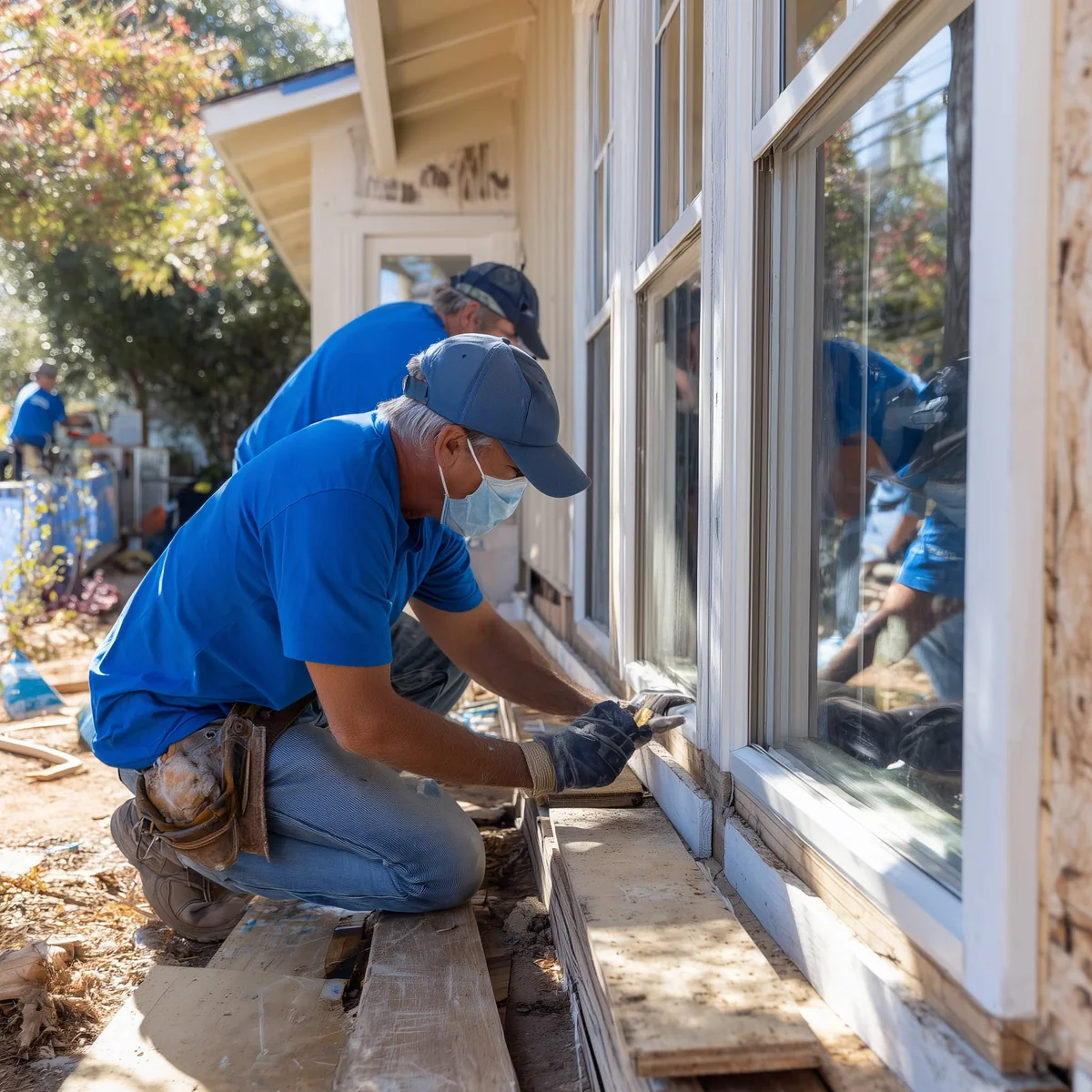
HVHZ window installation follows the strictest building code requirements in North America. Florida’s High-Velocity Hurricane Zone (HVHZ) covers Miami-Dade and Broward counties. Every aluminum window installed there must prove DP rating, large-missile impact resistance, and NOA compliance before a permit is issued. As a result, small installation mistakes turn into permit rejection and expensive rework. This guide walks through the complete installation sequence, from anchoring and buck framing to sealant joints and final inspection checkpoints, so your DP50/DP60 orders pass inspection the first time.
What Is HVHZ & Geographic Coverage
HVHZ jurisdiction only covers Miami-Dade County and Broward County along Florida’s southeast Atlantic coast. These regions endure Category 4–5 hurricane wind speeds, flying construction debris and sustained cyclonic pressure, which is why the state mandates upgraded window performance standards unavailable for inland Florida projects.
- Non-HVHZ Florida: Small missile impact standard, DP40–DP50 acceptable, Florida Product Approval enough
- HVHZ Miami/Broward: Mandatory large missile ASTM E1996 test, minimum DP50, official Miami-Dade NOA certificate required for permit issuance
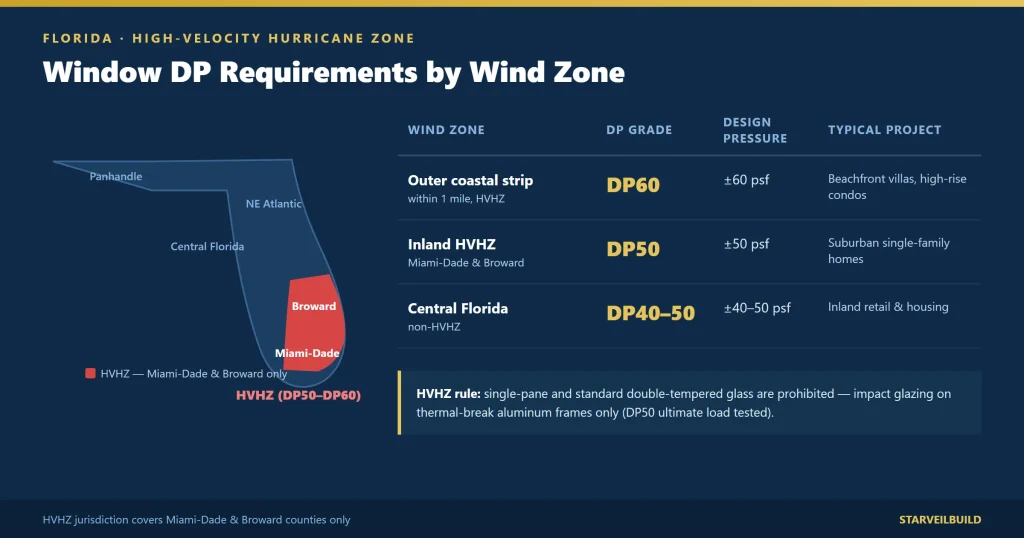
DP50 vs DP60 Rating Selection Rule
| Wind Zone | Required DP Grade | Design Pressure | Typical Project Type |
|---|---|---|---|
| Outer coastal 1-mile strip HVHZ | DP60 | ±60 psf | Beachfront villas, high-rise condos |
| Inland HVHZ residential area | DP50 | ±50 psf | Suburban single-family homes |
| Central Florida non-HVHZ | DP40–DP50 | ±40–50 psf | Inland retail & housing |
All DP-rated windows must pass 1.5x ultimate load testing without frame fracture, glass ejection or permanent deformation over 1/8 inch.
Mandatory HVHZ Window Components
Impact Glazing Standard
Single pane / standard double tempered glass is prohibited in HVHZ. Minimum spec: Laminated safety glass with 0.060” PVB interlayer, passes 9lb 2×4 large missile strike at 50 ft/s.
Frame & Hardware Requirements
- 6063-T5 aluminum frame, minimum 1.98mm wall thickness for mullions
- Multi-point stainless steel locking hardware (minimum 4 locking points for casement windows)
- Reinforced corner brackets for all sash joints to resist cyclic wind load
- Multi-chamber equal-pressure drainage system to stop hurricane rain backflow
NOA Compliance & Installation Mandates
NOA document must match the brand name on your building permit. Generic factory NOAs cannot be transferred to your company identity. Installation must strictly follow the anchor spacing, torque values and flashing details printed on your NOA paperwork.
Common inspection failure points: Insufficient wall anchors, incomplete exterior waterproof flashing, improper sill slope leading to rain intrusion.
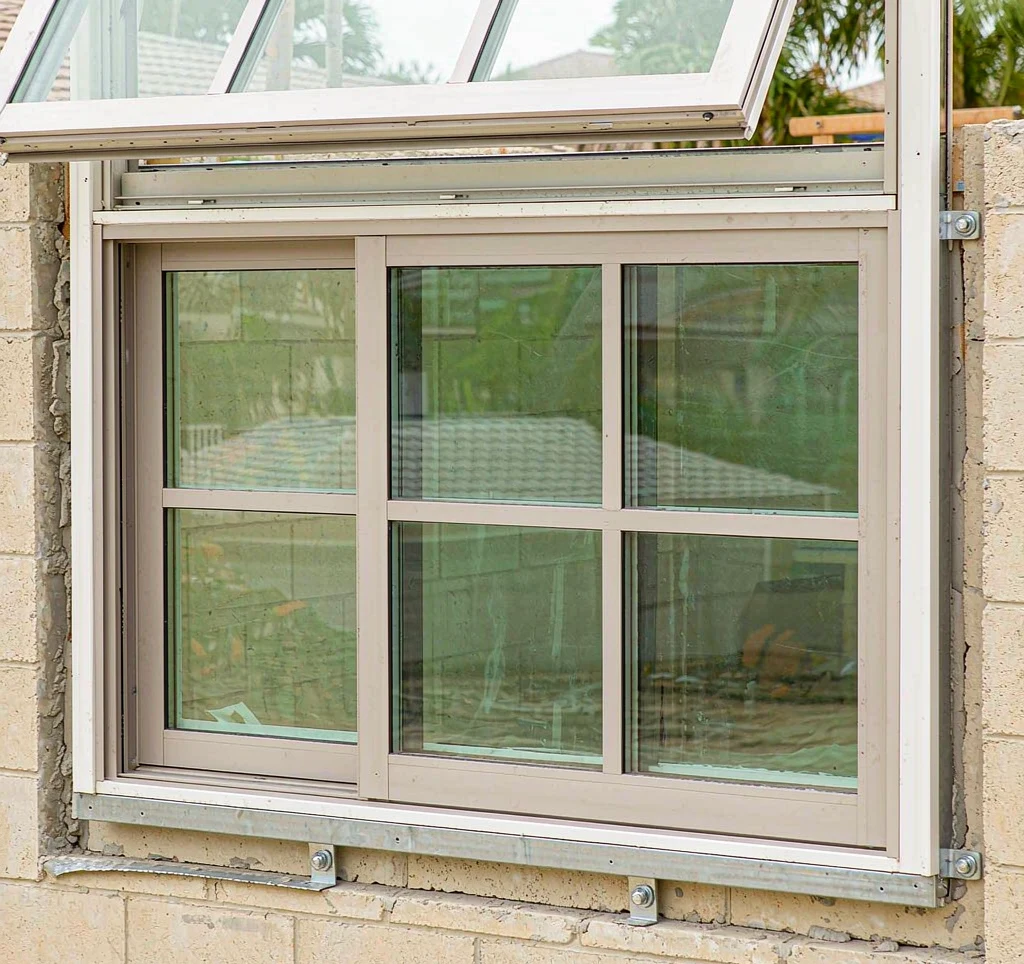
Documentation and fastening failures cause most HVHZ inspection rejections. Before scheduling any inspection, verify that the NOA (or Florida Product Approval number) matches the exact product, glazing configuration, and installation method on your permit drawings. You can look up every issued NOA in the Miami-Dade County Product Control database. In addition, check three physical details on site: anchor embedment depth into structural concrete or masonry, fastener torque per the manufacturer’s table, and continuous sealant coverage at the perimeter buck. For the missile-impact portion of the code, see our guide to ASTM E1996 large-missile impact testing. Finally, if you need the full standards context rather than installation details, read our overview of HVHZ hurricane window standards in Florida.
HVHZ Project Budget Case (10-Unit Coastal Townhome)
Standard DP50 impact aluminum window full package cost breakdown:
- Window frame + laminated impact glass: $62/m² average factory price
- Miami-Dade NOA lab testing fee: $16,000–$22,000 one-time per product line
- Local professional installation labor: $280–$420 per unit window
- Permit & inspection administrative fees: $75–$125 per building
Frequently Asked Questions
Q: Can I install DP40 windows in Miami-Dade HVHZ?
A: No, local building officials reject all projects with DP below 50 rating; DP60 is required for beachfront properties within one mile of ocean.
Q: Can vinyl impact windows meet HVHZ NOA standards?
A: Vinyl frames lack structural rigidity to pass DP50 ultimate load testing; only thermal break aluminum profiles are approved for Miami HVHZ zones.
Q: Does NOA expire after several years?
A: NOA certificates remain valid indefinitely as long as window design, glass and hardware match the tested specimen configuration.
What does correct HVHZ window installation require?
Correct HVHZ window installation requires engineered anchoring into structural concrete or masonry, a properly sized buck frame, laminated impact glazing with verified DP50 or DP60 ratings, and a NOA that matches the installed product. Every step must follow the manufacturer's installation instructions filed with the product approval.
How are impact windows anchored in the HVHZ?
In the HVHZ, impact windows are anchored through the buck frame into structural concrete or masonry with approved embedment depth and torque values. Fastener type, spacing, and shimming come directly from the manufacturer's NOA installation details, and inspectors check them against the permit drawings.
Download Free HVHZ Spec Checklist PDF Full DP rating, glass and installation compliance checklist for Florida permit applications. Download Resource →