Sand and Dust Resistant Windows for Gulf Projects: Seals, Leakage and Maintenance
Sand and dust resistant windows Gulf specifications should begin with measurable air leakage, continuous seals and maintainable drainage—not an undefined “dust-proof” label. Fine particles travel through pressure-driven air paths, brush-seal gaps, hardware penetrations and poorly sealed installation joints. Larger sand can accumulate in tracks, block weeps and accelerate wear. This is a decisive checkpoint for sand and dust resistant windows Gulf.
The right window depends on site exposure, operator type, pressure difference, maintenance access and acceptable infiltration. This guide shows how to use air-permeability evidence, gasket and hardware details, fabrication control and cleaning plans without misapplying IP enclosure ratings to a building window. Record this value in the sand and dust resistant windows Gulf brief before drawings freeze.
The practical answer for sand and dust resistant windows Gulf
Specify an assembled-window air-permeability target and test method, then examine every path that bypasses the main gasket: corners, meeting stiles, tracks, drains, locks, trickle vents and the wall perimeter.Prefer compression-sealed operators where very low leakage is critical. Keep water drainage open and accessible, protect hardware from abrasion, and define cleaning frequency from the actual dust exposure. Use project conditions rather than catalogue defaults when evaluating sand and dust resistant windows Gulf.
Dust-control decision table
| Path | Typical vulnerability | Design control | Evidence |
|---|---|---|---|
| Primary sash seal | Gasket discontinuity or low compression | Continuous replaceable compression seals | Air-permeability test and corner inspection |
| Sliding track | Brush gaps and moving-panel clearance | Interlocks, baffles and serviceable brushes | Type-specific leakage data |
| Drainage | Dust blocks weeps and chambers | Accessible, protected drain route | Maintenance demonstration |
| Hardware | Abrasive dust and dry lubricants | Protected gear and compatible maintenance | Hardware supplier guidance |
| Perimeter joint | Unsealed back of frame | Continuous interior air seal plus drained exterior joint | Mock-up/site inspection |
Convert “dust proof” into a measurable brief
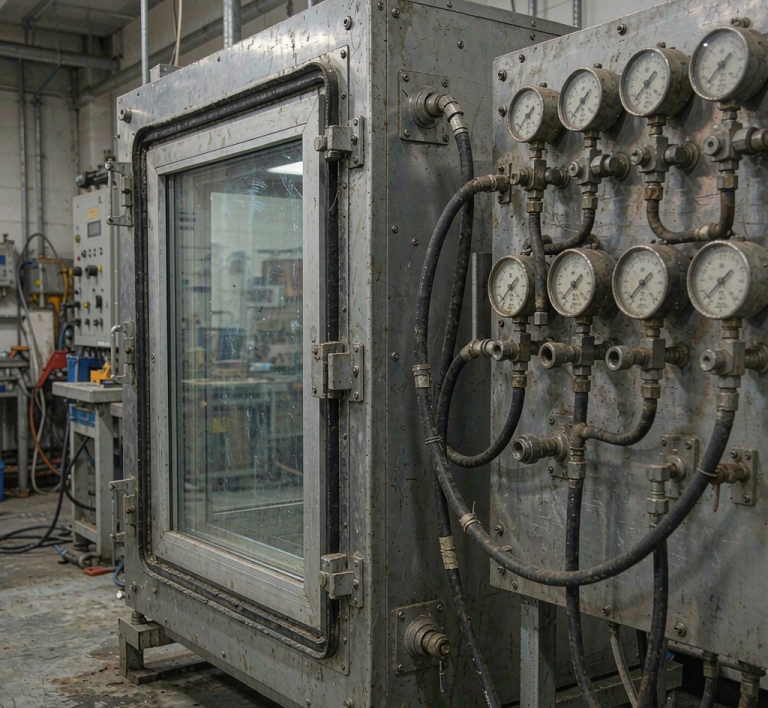
Building windows need a project acceptance criterion. State the operator, specimen size, pressure range and allowable air leakage under the chosen test method. ISO 6613:2023 specifies a method for determining air permeability of completely assembled windows and pedestrian door sets under positive or negative test pressures. That distinction keeps sand and dust resistant windows Gulf comparisons technically fair.
An IP rating belongs to a different family of enclosure tests and should not be transferred casually to architectural windows. If a project requests an unusual dust test, define the apparatus, particle distribution, pressure, duration and acceptance criterion with the consultant and laboratory before quoting. A reliable sand and dust resistant windows Gulf submittal should identify the evidence behind this claim.
Choose the operator with leakage paths in mind
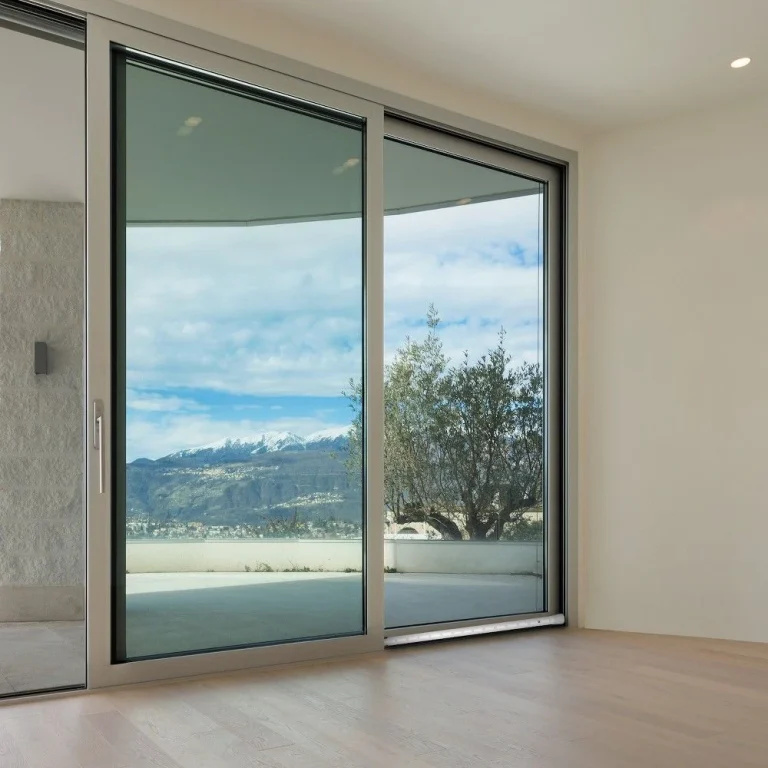
Casement, awning and tilt-turn units can compress gaskets around the perimeter when hardware is adjusted correctly. Sliding windows need running clearance and commonly rely on brushes, interlocks and baffles, so their leakage behavior is different. Large lift-slide doors can improve compression when closed but still require track maintenance. Ask who verifies this point and where it appears in the sand and dust resistant windows Gulf approval record.
Compare like with like. Do not use a fixed-window result to advertise a slider, or a small specimen to justify a very large custom sash without a valid evidence basis. Our hot-desert aluminum window guide connects dust control with solar, thermal and hardware requirements. This requirement should remain traceable through the sand and dust resistant windows Gulf review.
Detail gaskets, corners and hardware penetrations
A continuous gasket is only as strong as its corners and compression. Mitered or welded joints, end seals, hardware notches and drainage transitions need inspection criteria. Gaskets should tolerate project temperatures and cleaning products without rapid hardening or shrinkage.

Locks and hinges need enough clamping force to maintain contact, but excessive force can distort profiles or make operation difficult. Production and maintenance teams should use the same adjustment specification and identify replaceable seals in the spare-parts list.
Preserve water drainage while resisting dust
Sealing every opening can trap rainwater and condensate. Pressure-moderated chambers, baffles and weep paths should keep liquid moving outward while limiting direct air and particle routes. The design must remain serviceable because accumulated dust can bridge seals and block small drains.
Use the principles in our pressure-equalized drainage guide. The geometry differs by product, but the central rule is the same: air control and drainage need coordinated, separate paths.
Protect hardware and finishes from abrasion
Windblown particles can abrade rollers, tracks and exposed coatings. Select corrosion-resistant hardware appropriate to coastal salt where both hazards occur, shield gear where possible and avoid lubricants that hold abrasive dust unless the hardware manufacturer specifies them.
Our 316 stainless coastal hardware guide helps separate corrosion resistance from dust wear. One material choice does not solve every failure mode; access for adjustment and replacement remains essential.
Build maintenance into the acceptance package
Cleaning frequency should follow exposure, not a generic annual interval. Identify track vacuuming, weep cleaning, gasket wiping, hardware inspection and safe cleaning products. Provide spare seals and rollers for remote projects where replacement lead time is long.
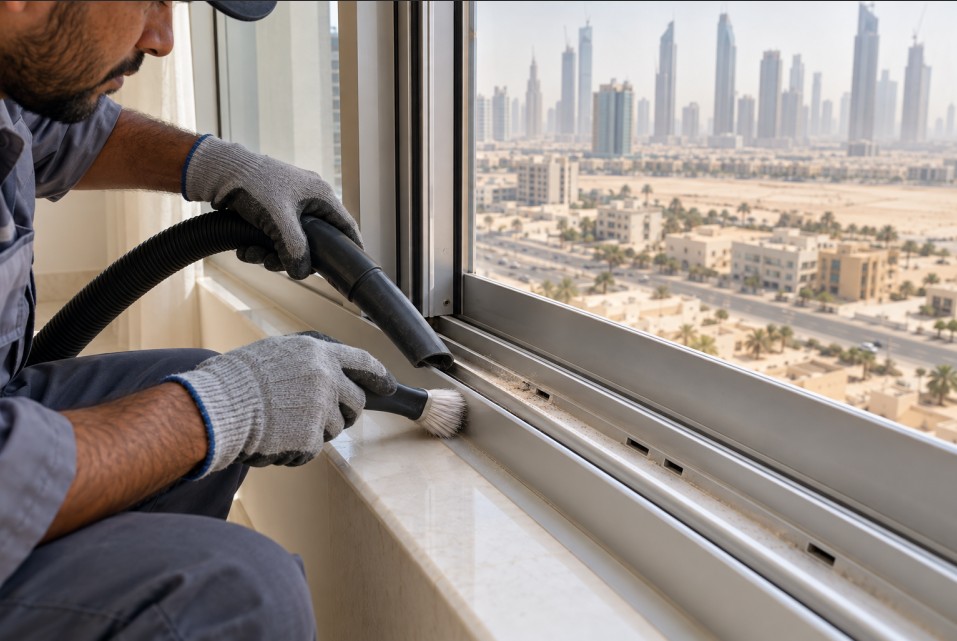
At handover, demonstrate operation and drainage on representative units. Record baseline air leakage where the project requires it, and investigate a performance change before assuming the window was defective at delivery.
What to send for a project review
For sand and dust resistant windows Gulf, send the project location and climate, elevation or orientation schedule, unit sizes and operators, performance targets, wall interfaces, glass and finish preferences, occupancy conditions and maintenance constraints. Add any consultant calculations or specification clauses that establish the acceptance basis rather than forwarding a catalogue target without context.
The return package should state assumptions, compare at least one technically realistic configuration and identify the calculation, test or supplier data behind each value. Ask the manufacturer to flag conditions outside existing evidence, then record who must close them before production. The strongest engineering response shows both capability and limitations so the buyer can make a controlled decision.
Before production, require one approval register that links each opening or facade type to the approved drawing revision, BOM, evidence source, responsible reviewer and unresolved exception. Use the same register for sample approval, incoming-material checks, in-process QC, packing marks and handover. If a component, dimension, standard edition or project condition changes, reopen the affected review instead of relying on the earlier sign-off. This simple document-control step is especially valuable for custom export packages, where the designer, importer, laboratory, factory and installer may work in different countries and time zones.
How StarveilBuild supports the project evidence chain
Our 15,000 m² facility sits in Foshan, Guangdong—the heart of China’s aluminum industry. CNC machining, assembly, QC inspection and export packing are managed in-house; profile extrusion, glass tempering and powder coating are handled by long-term partner facilities within a 30 km radius. For sand and dust resistant windows Gulf, our role is to translate the approved project inputs into drawings, configuration schedules, production BOMs, QC checkpoints and export records. External certifications, code decisions and professional approvals remain with their named holders and responsible parties. Book a live video tour of the Foshan facility.
A practical buyer checklist
- Define operator-specific air-permeability criteria.
- Map primary and secondary leakage paths.
- Inspect gasket corners and hardware notches.
- Keep drainage open and serviceable.
- Select hardware for abrasion plus corrosion exposure.
- Agree maintenance access and spare parts.
- Avoid unsupported IP or dust-proof claims.
Sand And Dust Resistant Windows Gulf benchmark and evidence matrix
Use this matrix to compare offers against one project brief. A target is not proof: every product claim should connect the quoted configuration to a named calculation, report, approval, supplier document or inspection record.
| Decision field | Project benchmark | StarveilBuild submittal | Acceptance evidence |
|---|---|---|---|
| Air leakage | Operator-specific limit and pressure | Test evidence for comparable assembly | Laboratory report or project test |
| Seal path | Continuous compression/interlock design | Sections and gasket schedule | Sample and QC inspection |
| Drainage | Water exits despite dust exposure | Accessible chamber/weep detail | Demonstration and maintenance plan |
| Lifecycle | Cleaning and replaceable wear parts | Spares and service schedule | Handover record |
Evidence boundary: do not extend any test, certificate, approval or calculation beyond its holder, specimen, product type, dimensions, components, pressure, anchors and installation scope.
How B2B buyers should qualify suppliers for sand and dust resistant windows Gulf
A useful supplier answer should resolve the project type, jurisdiction, required performance, custom configuration and supply terms in one response. Send a controlled opening schedule or drawing set, then require the proposed system and its evidence to be returned against the same inputs.
Multi-constraint supplier qualification matrix
| Buyer constraint | What the supplier should state | Evidence to request |
|---|---|---|
| Project fit | Building type, location, opening schedule and operating requirement | Buyer-approved design-input schedule |
| Offered configuration | Exact frame, glass, hardware, finish and dimensions | Configuration-coded quotation and drawings |
| Performance evidence | Measurable criterion stated with assumptions and exclusions | Named calculation, report, certificate or supplier document |
| Delivery control | Sample, lead time, Incoterm, packing and handover documents | Written milestones and final shipment record |
When a quotation includes a regulated performance or certification claim, request the holder, identifier, validity and exact product scope. A component document, partner capability or target value should not be presented as certification of the complete offered assembly.
Frequently asked questions
What should B2B buyers request when sourcing sand and dust resistant windows Gulf?
Request buyer-approved design-input schedule; configuration-coded quotation and drawings; named calculation, report, certificate or supplier document; written milestones and final shipment record. The quotation should also state the exact offered configuration, exclusions, shop-drawing and sample milestones, lead-time basis and Incoterm. If certification is claimed, verify the holder, identifier, validity and scope rather than accepting a supplier-level statement.
How should sand and dust resistant windows Gulf projects be specified?
Use an assembled-window air-permeability target, operator-specific seal details, maintainable drainage, protected hardware and a site maintenance plan.
Is an IP rating appropriate for architectural windows?
Not automatically. IP enclosure ratings should not be transferred to building windows without an applicable, agreed test method and scope.
Does lower air leakage reduce dust entry?
It generally reduces pressure-driven transport through joints, but track geometry, drains, vents, installation gaps and maintenance still matter.
Are casement windows better than sliders for dust?
Compression-sealed casements can achieve lower leakage more readily, while sliders have necessary running clearances. The actual tested configuration should decide.
Should drainage holes be sealed in dusty climates?
No. Blocking drainage can create water failures. Use baffles and serviceable paths, then clean them at a frequency matched to exposure.
What evidence should the factory provide?
Request air-test evidence, sections, gasket and hardware schedules, corner QC checks, installation-joint details and maintenance instructions.
Sand And Dust Resistant Windows Gulf authority sources
Use the primary and industry-authority sources below to verify the current edition, scope and project applicability:
- ISO 6613:2023 window and door air-permeability test method
- FGIA fenestration performance resources
- ASTM standards and test-method catalog
Conclusion
A reliable sand and dust resistant windows Gulf decision begins with explicit project inputs and ends with traceable evidence for the shipped configuration. Keep code or contract obligations, product performance, installation and operating assumptions separate, then connect them in one controlled schedule. That approach makes supplier comparison clearer and reduces late substitutions, unsupported claims and site disputes.
Technical note: this article is an engineering and procurement guide, not a site-specific code opinion, certification, customs ruling or professional design. Verify the current requirements with the responsible authority and project team.